Yes, I saw the video of the girl getting hit by the foul ball in Houston. No, you don't want to hear my opinion on it. Because I'm in the minority. I don't think they need to extend the netting all the way from foul pole to foul pole as Kris Bryant suggested. You know the risks when you sit there. They warn you before and during the game, and they print it on the tickets. Yet you decide to sit there anyway. If you don't want to assume that risk, sit somewhere else!
Rather, I'm here today to talk about the start of All*Star voting. This is the first All*Star Game under the new format. The traditional voting is now the "primary round," where the top three vote-getters at each position (nine outfielders) move on to "Election Day," where the 17 starters (9 AL, 8 NL) are chosen. And, in a fun twist, you can only vote once on Election Day. This isn't the Final Vote, where you could vote over and over again. One vote. That's it.
Also, the Final Vote is no more, having been replaced by Election Day. No Final Vote means each manager gets to select one additional position player, which will be especially worthwhile in the AL. Instead of being limited to one position player, Alex Cora will have two spots available when choosing his token team reps. So, we may not get stuck with a random middle reliever being the Oriole or Royal because there wasn't room for a more-deserving position player.
Anyway, Election Day is going to change All*Star voting in a number of ways. The most significant, of course, is that, since vote totals are reset, a massive lead over second place will mean nothing for the leading vote-getters in the first stage. It could also mean that there's less ballot-stuffing (or ballot-stuffing will have less of an impact). And, perhaps most importantly, we could actually see the most deserving players elected as the starters.
With that in mind, here are the players who've been the most All*Star worthy at their positions thru the season's first two months:
Catcher
AL: Gary Sanchez, Yankees
NL: Willson Contreras, Cubs
Look at the Kracken's numbers, then consider the fact that he spent two weeks visiting his friends on the Yankees' DL. With Salvador Perez out for the year and not on the ballot, he likely will make his first All*Star start. Willson Contreras will need to break the Buster Posey/Yadi Molina stranglehold on the position in the NL. But he's been better than both perennials this season.
1st Base
AL: Luke Voit, Yankees
NL: Josh Bell, Pirates
Once a position where you could always expect to see ridiculous numbers, first base is now one of the AL's weaker positions. Voit's numbers clearly stand out over an unimpressive crowd. Josh Bell has been a revelation for the Pirates this season. If not for Christian Yelich and Cody Bellinger, he'd be the NL MVP at this point.
2nd Base
AL: Tommy LaStella, Angels
NL: Ozzie Albies, Braves
This is Jose Altuve's domain, and I fully expect him to start at second for the AL like he usually does. But has he been the AL's best second baseman so far? No. It's actually been a toss-up between Tommy LaStella and DJ LeMahieu. It's a toss-up in the NL, too. You wouldn't be wrong to go with either Albies or Arizona's Ketel Marte.
Shortstop
AL: Jorge Polanco, Twins
NL: Jean Segura, Phillies
Minnesota has the best record in baseball. And Jorge Polanco has been a big reason for that. Of course, with the abundance of superstar names (Correa, Lindor), his most likely path to the roster is as a reserve. For all the moves the Phillies made in the offseason, the Segura trade ended up falling a little under the radar. But unlike some of their other newcomers, he's actually played to his All*Star potential.
3rd Base
AL: Alex Bregman, Astros
NL: Nolan Arenado, Rockies
As much as I love the legend that is Gio Urshela, Alex Bregman, last year's All*Star Game MVP, is blowing away the AL third base field. Although, Jose Ramirez started last year, so this could be the Indians' best chance to get a starter in their home park. In the NL, it's not even close between Arenado and everybody else.
Outfield
AL: Mike Trout, Angels; Michael Brantley, Astros; Austin Meadows, Rays
NL: Cody Bellinger, Dodgers; Christian Yelich, Brewers; Alex Verdugo, Dodgers
Obviously Mike Trout is All-World everything. Even his down years are better than the average player's good year. Michael Brantley has been the perfect addition to the Astros. This is the type of player he can be when he's healthy. And it would be cool to see him start an All*Star Game in Cleveland. I easily could've gone with another Astro, George Springer, as my third outfielder. But having watched Austin Meadows torch the Yankees and the Rays continue to hang around in the AL East, I'm giving him the nod.
In the National League, the first two selections were incredibly easy. With Bellinger and Yelich, the only real question is which one is currently the MVP (my choice would be Bellinger). The third outfielder is a little tougher. I'm going with Bellinger's Dodger teammate Alex Verdugo, who's sure making them look wise for trading Yasiel Puig and opening up a spot. It'll be interesting when A.J. Pollock comes back, but that's an issue for another day.
Designated Hitter
AL: Hunter Pence, Rangers
Something's wrong! Khris Davis is currently hitting .248! Where'd that extra point come from?! Anyway, for a guy who looked done at the end of last season, Hunter Pence sure has taken to both the American League and DHing. Of course, with J.D. Martinez and Nelson Cruz heating up, I fully expect to see one of them be the actual starter in Cleveland.
All of this, obviously, is subject to change. And, just because the format is different, it doesn't mean the traditional fan favorites won't collect high vote totals. Which doesn't make these 17 players any less deserving of selection. Currently, at least. It is still May, after all.
Thursday, May 30, 2019

Monday, May 27, 2019
Another Boston Championship
OK, it may be a bit premature to say that, but you know they're already planning the parade. The Bruins will look to extend Boston's domination of the 2018-19 sports scene with their first Stanley Cup in eight years. Their opponent, meanwhile, has been waiting nearly 50 years for the opportunity to once again play for the Cup. But now the Blues have ended the longest gap in NHL history. And I actually think they have a chance to make this a series.
In a way, these two are incredibly different. The Bruins were one of the best teams in hockey all year and were always considered a Cup favorite. The Blues were the worst team in the league in January (they're the first team ever to make the Stanley Cup Final after having the fewest points in the NHL at any point during the season). But they're here, once again proving that getting into the tournament is all that matters. Because anything can happen after that.
But the Bruins and Blues are also really similar. They might be the two deepest teams in the league. They've both consistently rolled, and gotten production from, all four lines, proving once again how it takes an entire roster to win the Cup, not just one or two superstars. They've also both gotten exceptional goaltending, the real key to playoff success. Tuukka Rask is probably the leading candidate for the Conn Smythe right now, and Jordan Binnington sure hasn't looked like a rookie.
St. Louis is a ridiculous 7-2 on the road in the playoffs, so the fact that they need at least one road win to have any chance of hoisting the Cup shouldn't faze them in the slightest. Although, Boston is 6-3 at home, so something's gotta give.
The Bruins have been on a roll since the middle of the Columbus series. They've won seven straight since trailing the Blue Jackets 2-1, including a sweep of Carolina in the Eastern Conference Final. Speaking of that, I don't think I've seen a crazier stat that what happened in the Eastern Conference playoffs. The Islanders swept the Penguins, then got swept by the Hurricanes...who then got swept by the Bruins! So, if the trend continues, that means Boston will get swept by St. Louis, right?
It might just be a coincidence. It probably is. But you also have to consider the rest factor. Normally a short series is considered a good thing because you get more rest. But you also run the risk of getting too much rest. I think the Islanders and Hurricanes both had too much rest. It messed with their momentum. And for Boston, that could be a real fear. Because Game 1 will be the Bruins' first in 10 days. (Although, the Blues haven't played in six days, so there isn't too big a difference there.)
Frankly, I don't think the amount of rest really had any bearing on the Eastern Conference Final. The Bruins are a better team than the Hurricanes and they played like it. Plain and simple. Rask gave up just five goals in the entire series, completely overshadowing an offense that scored 17 times, with contributions from everyone. Boston is one of the most complete teams in hockey, which showed against Carolina.
Meanwhile, the Western Conference Final turned on San Jose's controversial overtime game-winner in Game 3. After that, Binnington decided that it would just be easier if he didn't let the Sharks score at all, holding them to just two goals over the final three games. And the Blues dominated San Jose in Games 5 & 6, outplaying the Sharks in every aspect of the game, most importantly on the scoreboard, where they outscored them 10-1. With contributions coming from, you guessed it, all four lines.
So, the Blues finally got past all their playoff demons. This might not have been the St. Louis team people expected to do it, but it became more and more believable as the season went on. And once the playoffs started and they got on this roll, it's no longer a surprise. In fact, their story is very similar to the three previous Western Conference Champions (San Jose, Nashville, Vegas). When the playoffs started, you didn't think much of them. Then, by the time they reach the Final, you find yourself rooting for them.
And now they've come full circle, as their first Stanley Cup Final game since 1970 will be against the same team as their last one. That 1970 Bruins-Blues series gave us perhaps THE most iconic image in hockey history, Bobby Orr flying thru the air after scoring the series-clinching goal in Game 4. That was actually the third straight Final appearance for the Blues, who went to the Final in their first three seasons of existence (partially because the NHL set it up so an expansion team was guaranteed to play for the Cup), only to get swept each time, twice by Montreal, then by Boston. This time they at least look poised to be competitive.

Another fun fact about those Blues teams that went to three straight Finals to start their existence: their 1967-68 team was the only first-year expansion team to play for the Cup until the Golden Knights' run last year.
Then there's this one, which isn't new, but is still cool: Boston and St. Louis are also the only cities to have played for the championship in all four major sports (which is even more impressive when you consider St. Louis doesn't even have an NBA or NFL team anymore). Speaking of the Rams, they provide a link between the three Boston championship series in the last nine months. The Red Sox played the Dodgers, who play in LA. The Rams moved to LA from St. Louis. And now the Bruins play St. Louis to complete the Boston trifecta.
Anyway, back to this series. Rest may not be a big factor, but experience very well could be. This isn't just the first Stanley Cup Final appearance for the St. Louis franchise in nearly half a century. It's also the first Stanley Cup Final for all but two players on the Blues' roster. The Bruins, meanwhile, still have those five core players (Chara, Rask, Bergeron, Krejci, Marchand) from their 2011 Cup winner, and three others who've played in the Final previously.
That Final experience may be the biggest difference between these two teams. They're both deep and talented offensively. They've both gotten great goaltending. But something's gotta separate them, and that experience factor may very well be it.
Boston was going to be the favorite either way. Then, when you throw in the veteran presence of Zdeno Chara and Co., it's definitely advantage Bruins. And, I know both goalies are hot. But Tuukka Rask's play has been otherworldly. He'll win a game or two all by himself. Which is enough for me to say Bruins in six.
Besides, if the past year has taught us anything, it's that Boston teams don't lose once they get this far. The Bruins are, however, the most tolerable of the three by far, so that makes this one a little easier to deal with. Regardless, Boston fans will be given yet another reason to be even more obnoxious than usual, as they attend their third championship parade in less than a year.
In a way, these two are incredibly different. The Bruins were one of the best teams in hockey all year and were always considered a Cup favorite. The Blues were the worst team in the league in January (they're the first team ever to make the Stanley Cup Final after having the fewest points in the NHL at any point during the season). But they're here, once again proving that getting into the tournament is all that matters. Because anything can happen after that.
But the Bruins and Blues are also really similar. They might be the two deepest teams in the league. They've both consistently rolled, and gotten production from, all four lines, proving once again how it takes an entire roster to win the Cup, not just one or two superstars. They've also both gotten exceptional goaltending, the real key to playoff success. Tuukka Rask is probably the leading candidate for the Conn Smythe right now, and Jordan Binnington sure hasn't looked like a rookie.
St. Louis is a ridiculous 7-2 on the road in the playoffs, so the fact that they need at least one road win to have any chance of hoisting the Cup shouldn't faze them in the slightest. Although, Boston is 6-3 at home, so something's gotta give.
The Bruins have been on a roll since the middle of the Columbus series. They've won seven straight since trailing the Blue Jackets 2-1, including a sweep of Carolina in the Eastern Conference Final. Speaking of that, I don't think I've seen a crazier stat that what happened in the Eastern Conference playoffs. The Islanders swept the Penguins, then got swept by the Hurricanes...who then got swept by the Bruins! So, if the trend continues, that means Boston will get swept by St. Louis, right?
It might just be a coincidence. It probably is. But you also have to consider the rest factor. Normally a short series is considered a good thing because you get more rest. But you also run the risk of getting too much rest. I think the Islanders and Hurricanes both had too much rest. It messed with their momentum. And for Boston, that could be a real fear. Because Game 1 will be the Bruins' first in 10 days. (Although, the Blues haven't played in six days, so there isn't too big a difference there.)
Frankly, I don't think the amount of rest really had any bearing on the Eastern Conference Final. The Bruins are a better team than the Hurricanes and they played like it. Plain and simple. Rask gave up just five goals in the entire series, completely overshadowing an offense that scored 17 times, with contributions from everyone. Boston is one of the most complete teams in hockey, which showed against Carolina.
Meanwhile, the Western Conference Final turned on San Jose's controversial overtime game-winner in Game 3. After that, Binnington decided that it would just be easier if he didn't let the Sharks score at all, holding them to just two goals over the final three games. And the Blues dominated San Jose in Games 5 & 6, outplaying the Sharks in every aspect of the game, most importantly on the scoreboard, where they outscored them 10-1. With contributions coming from, you guessed it, all four lines.
So, the Blues finally got past all their playoff demons. This might not have been the St. Louis team people expected to do it, but it became more and more believable as the season went on. And once the playoffs started and they got on this roll, it's no longer a surprise. In fact, their story is very similar to the three previous Western Conference Champions (San Jose, Nashville, Vegas). When the playoffs started, you didn't think much of them. Then, by the time they reach the Final, you find yourself rooting for them.
And now they've come full circle, as their first Stanley Cup Final game since 1970 will be against the same team as their last one. That 1970 Bruins-Blues series gave us perhaps THE most iconic image in hockey history, Bobby Orr flying thru the air after scoring the series-clinching goal in Game 4. That was actually the third straight Final appearance for the Blues, who went to the Final in their first three seasons of existence (partially because the NHL set it up so an expansion team was guaranteed to play for the Cup), only to get swept each time, twice by Montreal, then by Boston. This time they at least look poised to be competitive.

Another fun fact about those Blues teams that went to three straight Finals to start their existence: their 1967-68 team was the only first-year expansion team to play for the Cup until the Golden Knights' run last year.
Then there's this one, which isn't new, but is still cool: Boston and St. Louis are also the only cities to have played for the championship in all four major sports (which is even more impressive when you consider St. Louis doesn't even have an NBA or NFL team anymore). Speaking of the Rams, they provide a link between the three Boston championship series in the last nine months. The Red Sox played the Dodgers, who play in LA. The Rams moved to LA from St. Louis. And now the Bruins play St. Louis to complete the Boston trifecta.
Anyway, back to this series. Rest may not be a big factor, but experience very well could be. This isn't just the first Stanley Cup Final appearance for the St. Louis franchise in nearly half a century. It's also the first Stanley Cup Final for all but two players on the Blues' roster. The Bruins, meanwhile, still have those five core players (Chara, Rask, Bergeron, Krejci, Marchand) from their 2011 Cup winner, and three others who've played in the Final previously.
That Final experience may be the biggest difference between these two teams. They're both deep and talented offensively. They've both gotten great goaltending. But something's gotta separate them, and that experience factor may very well be it.
Boston was going to be the favorite either way. Then, when you throw in the veteran presence of Zdeno Chara and Co., it's definitely advantage Bruins. And, I know both goalies are hot. But Tuukka Rask's play has been otherworldly. He'll win a game or two all by himself. Which is enough for me to say Bruins in six.
Besides, if the past year has taught us anything, it's that Boston teams don't lose once they get this far. The Bruins are, however, the most tolerable of the three by far, so that makes this one a little easier to deal with. Regardless, Boston fans will be given yet another reason to be even more obnoxious than usual, as they attend their third championship parade in less than a year.
Sunday, May 26, 2019
The Greatest Spectacle In Racing
We knew going in that this year's Indy 500 would be different. That's because for the first time since 1965, the race won't be on ABC. And in the first year of NBC's deal, their entire three-hour TV window when they were supposed to do pole and Bump Day qualifying last Sunday was rain delayed. They continued coverage on NBCSN later, and, amazingly, they were able to fill the last row and set the top nine positions. But let's hope their maiden voyage with the Indy 500 itself features better weather.
Qualifying proved to be interesting, too. Fernando Alonso, the former F1 World Champion, didn't qualify. That was the same fate James Hinchcliffe, one of the most popular drivers on the IndyCar circuit, suffered last year. Hinchcliffe was on the bubble again after a crash on the first day of qualifying, but he was able to make the field in a backup car.
Part of the Indy mystique is that long-standing belief among drivers that the track picks the winner. It really is the only way to explain some of the weird stuff that has happened over the years. Ask any member of the Andretti family what they think about that. It's been 50 years since Mario earned the family's only win at the Brickyard.
Anyway, the real reason why I brought that up is because it sure looks like the Brickyard has decided how James Hinchcliffe's Indy 500 career is going to go. Although, I used to think that about Tony Kanaan and Will Power, but, after Power's victory last year, they're now both former Indy 500 champions. So maybe the Indy Curse can be lifted, after all.
That's good news for a bunch of drivers who've had fast cars all month. Starting with pole-sitter Simon Pagenaud, who also turned in the fastest practice laps the day after securing the pole. He's got the speed and he's got the car. He'll be a factor.
Then there's Indianapolis native Ed Carpenter. He just missed his second straight and fourth career Indy pole, finishing just 0.003 mph behind Pagenaud on pole day. So he'll have to settle for starting on the front row for the third consecutive time. Carpenter finished second last year, and if he were to move up a position that would be a very popular victory with a lot of people.
Carpenter's not the only Ed worth mentioning. Ed Jones was the Indy 500 Rookie of the Year in 2017, when he finished third. This year, he made the Fast Nine and had the top speed in one of the practice sessions. A good driver with a fast car is a good combination at Indy. And Ed Jones is a good driver with a fast car. He'll be a factor. I'll be shocked if he's not in the top 10.
Or maybe 19-year-old Colton Herta will win Indy in his first try. His dad, Bryan, a two-time top five finisher as a driver, has won two Indy 500s as a team owner, including Alexander Rossi's victory in 2016. That was the last time a rookie won, but Colton Herta is starting fifth and has impressed everyone all month. He looks poised to win Rookie of the Year honors. Unless Marcus Ericsson does. Ericsson's team won the pit stop challenge, so you know he's got a good car.
Another guy who won this race as a rookie actually crossed the line of bricks first on both his first AND second tries. I'm, of course, talking about the legend Helio Castroneves. It's been 10 years since he picked up that third win. But let's not forget he's finished second twice since then. There's a reason Helio has 14 Top 10s in his Indy 500 career. As long as he's in a car, he's in the conversation.
Helio isn't the only former champion who's remarkably consistent at the Brickyard. Scott Dixon won the 2008 Indy 500, has finished second twice and was third last year. He's starting 18th this year, but don't be surprised to see him quickly make his way through the field and into the discussion. In order to win, though, Dixon will have to be as close to perfect as possible, and he probably needs to get a little lucky, too.
But I never count out any former winners at the Indy 500. They know what it's like to sip the milk, and you know they want to have that feeling again. Although, I like the chances for former champs Power, Rossi, Helio and Dixon a little bit more than I do for Kanaan, Takuma Sato and Ryan Hunter-Reay.
I really feel like this is a year where we're going to see some new blood at the top, though. By "new" I mean somebody who hasn't won Indy before. I really think it'll be one of the Eds or Pagenaud. They've all been so impressive all month. So has Colton Herta. Danica Patrick can't stop raving about him. And I wouldn't be surprised to see James Hinchcliffe shut all of us up and make a run towards the front after starting 32nd.
My track record with Indy 500 picks has been surprisingly good. I nailed it with Will Power last year, and I correctly called the late Dan Wheldon in 2011 (which was the other win for Bryan Herta as a team owner). So I take my Indy pick seriously. I'm just so unsure this year. Because I like so many drivers.
The one name I keep coming back to, though, is Simon Pagenaud. The Frenchman's on the pole, and he's the driver to beat. Although, he's just one of a handful of drivers with a legitimate chance to come away with the win. Which means NBC's first go at Indy should be a competitive one.
Qualifying proved to be interesting, too. Fernando Alonso, the former F1 World Champion, didn't qualify. That was the same fate James Hinchcliffe, one of the most popular drivers on the IndyCar circuit, suffered last year. Hinchcliffe was on the bubble again after a crash on the first day of qualifying, but he was able to make the field in a backup car.
Part of the Indy mystique is that long-standing belief among drivers that the track picks the winner. It really is the only way to explain some of the weird stuff that has happened over the years. Ask any member of the Andretti family what they think about that. It's been 50 years since Mario earned the family's only win at the Brickyard.
Anyway, the real reason why I brought that up is because it sure looks like the Brickyard has decided how James Hinchcliffe's Indy 500 career is going to go. Although, I used to think that about Tony Kanaan and Will Power, but, after Power's victory last year, they're now both former Indy 500 champions. So maybe the Indy Curse can be lifted, after all.
That's good news for a bunch of drivers who've had fast cars all month. Starting with pole-sitter Simon Pagenaud, who also turned in the fastest practice laps the day after securing the pole. He's got the speed and he's got the car. He'll be a factor.
Then there's Indianapolis native Ed Carpenter. He just missed his second straight and fourth career Indy pole, finishing just 0.003 mph behind Pagenaud on pole day. So he'll have to settle for starting on the front row for the third consecutive time. Carpenter finished second last year, and if he were to move up a position that would be a very popular victory with a lot of people.
Carpenter's not the only Ed worth mentioning. Ed Jones was the Indy 500 Rookie of the Year in 2017, when he finished third. This year, he made the Fast Nine and had the top speed in one of the practice sessions. A good driver with a fast car is a good combination at Indy. And Ed Jones is a good driver with a fast car. He'll be a factor. I'll be shocked if he's not in the top 10.
Or maybe 19-year-old Colton Herta will win Indy in his first try. His dad, Bryan, a two-time top five finisher as a driver, has won two Indy 500s as a team owner, including Alexander Rossi's victory in 2016. That was the last time a rookie won, but Colton Herta is starting fifth and has impressed everyone all month. He looks poised to win Rookie of the Year honors. Unless Marcus Ericsson does. Ericsson's team won the pit stop challenge, so you know he's got a good car.
Another guy who won this race as a rookie actually crossed the line of bricks first on both his first AND second tries. I'm, of course, talking about the legend Helio Castroneves. It's been 10 years since he picked up that third win. But let's not forget he's finished second twice since then. There's a reason Helio has 14 Top 10s in his Indy 500 career. As long as he's in a car, he's in the conversation.
Helio isn't the only former champion who's remarkably consistent at the Brickyard. Scott Dixon won the 2008 Indy 500, has finished second twice and was third last year. He's starting 18th this year, but don't be surprised to see him quickly make his way through the field and into the discussion. In order to win, though, Dixon will have to be as close to perfect as possible, and he probably needs to get a little lucky, too.
But I never count out any former winners at the Indy 500. They know what it's like to sip the milk, and you know they want to have that feeling again. Although, I like the chances for former champs Power, Rossi, Helio and Dixon a little bit more than I do for Kanaan, Takuma Sato and Ryan Hunter-Reay.
I really feel like this is a year where we're going to see some new blood at the top, though. By "new" I mean somebody who hasn't won Indy before. I really think it'll be one of the Eds or Pagenaud. They've all been so impressive all month. So has Colton Herta. Danica Patrick can't stop raving about him. And I wouldn't be surprised to see James Hinchcliffe shut all of us up and make a run towards the front after starting 32nd.
My track record with Indy 500 picks has been surprisingly good. I nailed it with Will Power last year, and I correctly called the late Dan Wheldon in 2011 (which was the other win for Bryan Herta as a team owner). So I take my Indy pick seriously. I'm just so unsure this year. Because I like so many drivers.
The one name I keep coming back to, though, is Simon Pagenaud. The Frenchman's on the pole, and he's the driver to beat. Although, he's just one of a handful of drivers with a legitimate chance to come away with the win. Which means NBC's first go at Indy should be a competitive one.
Saturday, May 25, 2019
Death, Taxes, the Patriots, the Warriors, and Rafael Nadal
They say that death and taxes are the only certainties in life. But that list could easily be expanded to five certainties. Because, like clockwork, the Patriots are going to end up in the Super Bowl, the Warriors are going to wind up in the NBA Finals...and Rafael Nadal's going to win the French Open.
There actually are three times he HASN'T won it since 2005, but you'd be forgiven for not remembering any of them. Believe it or not, other players (Stan Wawrinka, Novak Djokovic) won back-to-back French Opens in 2015-16. Then there was 2009, when a certain Swiss guy finally got that French Open monkey off his back. On the 10th anniversary of that victory and 20th anniversary of his Grand Slam debut right here (he lost to Pat Rafter in the first round), Roger returns to the red clay of Roland Garros for the first time since 2015.
The main reason Federer has missed the last three French Opens is pretty straightforward. He was injured in 2016, but sat out voluntarily to rest up for Wimbledon in 2017 and 2018. But there's another reason, too. Clay is his weakest surface, and his chances of beating Nadal are minimal at best. It's kinda like those poor Jeopardy! contestants who've had to go against James Holzhauer over the past six weeks. And, honestly, who can blame him for saying "Why bother?" with Wimbledon, his best Grand Slam, coming up less than a month later?
Although, even with all this talk about Rafa looking to extend his record to 12 French Open titles, there's another storyline that can't be overlooked. When he won his French Open title in 2016, Novak Djokovic completed a "Nole Slam." And this year he heads to Roland Garros with a chance to do it again. Serena has two "Serena Slams." It would be just as incredible for him to join her in that club and do the "Nole Slam" twice.
And here's another remarkable stat about Djokovic: if he wins, it'll be his 16th Grand Slam title, which would put him just one behind Nadal. A Nadal win, meanwhile, would move him to 18, just two behind Federer.
It really is incredible to think that when Pete Sampras retired in 2002, he was the all-time record-holder with 14 Grand Slam titles. He's now fourth behind all three of them! Federer, Nadal and Djokovic have combined to win 52 Grand Slam tournaments since Roger's first at Wimbledon 2003. That covers 13 of the last 16 years! Or, to put it another way, that's all but 10 of the Grand Slam tournaments played in that time! (And if you add in the three each for Andy Murray and Stan Wawrinka, it's an even more staggering 58 of the last 63 Grand Slams won by the same five people).
So, while there are plenty of other talented men in the field, all signs point to another Djokovic-Nadal final. The only question is whether Rafa will make it No. 12 or Novak will make it four in a row. Seeing as Nadal was given a ridiculously easy early draw (qualifiers in the first round), he's not going to be tested. That'll pay off later in the tournament, which is why I'm going with the former of the two options.
On the women's side, however, it's wide open. Unlike the men, they go into this thing with a whole list of players who could win. There have been five different champions in the last five years, and that could easily be extended to six. Especially when you consider that list doesn't include Karolina Pliskova or Elina Svitolina, both of whom are still seeking their first career Grand Slam title.
Naomi Osaka is the best women's player on the planet and has won the last two Grand Slams, but those were both on hardcourts. She's never been past the third round in Paris, and her style of play doesn't seem well-suited to clay. So it would be a stretch to call her the "favorite."
You can't really call Serena the "favorite" either. It was here last year that she made her return to Grand Slam tennis after giving birth, and that return was mired in controversy because she wasn't seeded. This year, that's not an issue. She's ranked 10th and seeded 10th. Although, that means a potential quarterfinal matchup with Osaka, which would be quite compelling (especially since it would be their first Grand Slam meeting since the US Open final).
If you're looking for a favorite, Simona Halep would have to be it. She's the defending champion and was the finalist in 2017. I'm not saying Halep is the female Rafael Nadal. But she's definitely the best clay-court player in the world. Most importantly, her draw is favorable. On paper, her toughest match is the semifinal against the Serena-Osaka winner. But this is the French Open. Where weird things happen.
Another clay-courter worth keeping an eye on is Kiki Bertens. She won the tune-up tournament in Madrid, beating Sloane Stephens in the semis and Halep in the final, to reach a career-high No. 4 in the rankings, the highest-ever for a Dutch player. She was a semifinalist here in 2016 (by far her best-ever Grand Slam result), but has only won six total matches in her other six French Open appearances. Plus, this is the first time she's ever really been expected to challenge at a major, so we'll see how well she handles that pressure. Bertens also has a difficult draw with former champion Garbine Muguruza and last year's finalist Sloane Stephens as potential opponents.
Stephens and Muguruza are two of the other names that wouldn't surprise anyone if they put the necessary seven wins together to hoist the Coupe Suzanne Lenglen. There's a potential Angie Kerber-Karolina Pliskova quarterfinal, and the winner of that could easily run the table. But those two also seem like candidates for an early-round upset. The women's field is just so deep.
I feel compelled to make a pick, though. So I'm gonna go with Halep to repeat. I'll say she knocks off Svitolina in the final. She's going to reward my confidence in her one of these days.
There actually are three times he HASN'T won it since 2005, but you'd be forgiven for not remembering any of them. Believe it or not, other players (Stan Wawrinka, Novak Djokovic) won back-to-back French Opens in 2015-16. Then there was 2009, when a certain Swiss guy finally got that French Open monkey off his back. On the 10th anniversary of that victory and 20th anniversary of his Grand Slam debut right here (he lost to Pat Rafter in the first round), Roger returns to the red clay of Roland Garros for the first time since 2015.
The main reason Federer has missed the last three French Opens is pretty straightforward. He was injured in 2016, but sat out voluntarily to rest up for Wimbledon in 2017 and 2018. But there's another reason, too. Clay is his weakest surface, and his chances of beating Nadal are minimal at best. It's kinda like those poor Jeopardy! contestants who've had to go against James Holzhauer over the past six weeks. And, honestly, who can blame him for saying "Why bother?" with Wimbledon, his best Grand Slam, coming up less than a month later?
Although, even with all this talk about Rafa looking to extend his record to 12 French Open titles, there's another storyline that can't be overlooked. When he won his French Open title in 2016, Novak Djokovic completed a "Nole Slam." And this year he heads to Roland Garros with a chance to do it again. Serena has two "Serena Slams." It would be just as incredible for him to join her in that club and do the "Nole Slam" twice.
And here's another remarkable stat about Djokovic: if he wins, it'll be his 16th Grand Slam title, which would put him just one behind Nadal. A Nadal win, meanwhile, would move him to 18, just two behind Federer.
It really is incredible to think that when Pete Sampras retired in 2002, he was the all-time record-holder with 14 Grand Slam titles. He's now fourth behind all three of them! Federer, Nadal and Djokovic have combined to win 52 Grand Slam tournaments since Roger's first at Wimbledon 2003. That covers 13 of the last 16 years! Or, to put it another way, that's all but 10 of the Grand Slam tournaments played in that time! (And if you add in the three each for Andy Murray and Stan Wawrinka, it's an even more staggering 58 of the last 63 Grand Slams won by the same five people).
So, while there are plenty of other talented men in the field, all signs point to another Djokovic-Nadal final. The only question is whether Rafa will make it No. 12 or Novak will make it four in a row. Seeing as Nadal was given a ridiculously easy early draw (qualifiers in the first round), he's not going to be tested. That'll pay off later in the tournament, which is why I'm going with the former of the two options.
On the women's side, however, it's wide open. Unlike the men, they go into this thing with a whole list of players who could win. There have been five different champions in the last five years, and that could easily be extended to six. Especially when you consider that list doesn't include Karolina Pliskova or Elina Svitolina, both of whom are still seeking their first career Grand Slam title.
Naomi Osaka is the best women's player on the planet and has won the last two Grand Slams, but those were both on hardcourts. She's never been past the third round in Paris, and her style of play doesn't seem well-suited to clay. So it would be a stretch to call her the "favorite."
You can't really call Serena the "favorite" either. It was here last year that she made her return to Grand Slam tennis after giving birth, and that return was mired in controversy because she wasn't seeded. This year, that's not an issue. She's ranked 10th and seeded 10th. Although, that means a potential quarterfinal matchup with Osaka, which would be quite compelling (especially since it would be their first Grand Slam meeting since the US Open final).
If you're looking for a favorite, Simona Halep would have to be it. She's the defending champion and was the finalist in 2017. I'm not saying Halep is the female Rafael Nadal. But she's definitely the best clay-court player in the world. Most importantly, her draw is favorable. On paper, her toughest match is the semifinal against the Serena-Osaka winner. But this is the French Open. Where weird things happen.
Another clay-courter worth keeping an eye on is Kiki Bertens. She won the tune-up tournament in Madrid, beating Sloane Stephens in the semis and Halep in the final, to reach a career-high No. 4 in the rankings, the highest-ever for a Dutch player. She was a semifinalist here in 2016 (by far her best-ever Grand Slam result), but has only won six total matches in her other six French Open appearances. Plus, this is the first time she's ever really been expected to challenge at a major, so we'll see how well she handles that pressure. Bertens also has a difficult draw with former champion Garbine Muguruza and last year's finalist Sloane Stephens as potential opponents.
Stephens and Muguruza are two of the other names that wouldn't surprise anyone if they put the necessary seven wins together to hoist the Coupe Suzanne Lenglen. There's a potential Angie Kerber-Karolina Pliskova quarterfinal, and the winner of that could easily run the table. But those two also seem like candidates for an early-round upset. The women's field is just so deep.
I feel compelled to make a pick, though. So I'm gonna go with Halep to repeat. I'll say she knocks off Svitolina in the final. She's going to reward my confidence in her one of these days.
Thursday, May 23, 2019
Changing the Draft Game
Carter Stewart is taking a big risk. He may pull it off, he may not. We're still too far away from knowing. But if he does, he could change the MLB Draft forever.
Stewart is a 19-year-old pitcher who was taken eighth overall by the Braves last year, but didn't sign after they reduced his signing bonus. He pitched a junior college in Florida this year, which means he's eligible to be drafted again next month (had he gone to a four-year college, he would've had to wait until after his junior year). Stewart was projected as a second-round pick. But that's not going to happen. He's going to Japan instead.
In a groundbreaking agreement, Stewart is on the verge of signing a six-year, $7 million deal with the Fukuoka SoftBank Hawks in the Japanese Pacific League. That's significantly more money than he'd earn making his way through the Minors. And, more importantly, it'll make him a free agent earlier.
Because he'll technically be an international free agent, he'll fall under the same posting system as Ichiro and Masahiro Tanaka and Shohei Ohtani. Stewart is committing to six years in Japan. But after that, he'll be able to go anywhere he wants as a 25-year-old free agent. Which is much earlier than he would under the standard Major League rookie contract.
He'll also hit free agency a lot richer than he would be making his way through the Minors. Under the terms of the current CBA, rookie salaries are slotted based on their draft position. They don't make the real money until they reach the Majors. But even the Major League minimum is $550,000. So, $7 million plus incentives and still becoming a free agent at 25 or a few years in the Minors followed by a few at the league minimum? The math seems pretty simple to me.
This isn't the first time a player has bet on himself like this. Bryce Harper finished high school in three years then enrolled in a junior college just so he could enter the draft a year earlier. We all know how things worked out for him.
Perhaps not surprisingly, Harper and Stewart share an agent. Scott Boras. Boras has a reputation for making sure his clients get the most money possible, and this is just another example of it. Boras has evidently tried to exploit this loophole before, but hasn't had a client brave enough to try it until now. And it's definitely worth watching to see if it works. Because if it does, Stewart won't be the last.
The move is bold, and the risk is calculated. There's no guarantee of success. There are massive cultural differences between Japan and the United States. And he's there for six years no matter what. There's no getting out of the contract early if things don't work out. But Stewart and Boras are banking on the positives outweighing the negatives. And banking on the financial windfall that could be the result.
Keep in mind, too, that he isn't using this as a shortcut to the draft. No shortcut is needed. If he wanted to, he could be drafted in a few weeks and playing rookie ball shortly after that. This is a conscious choice to, essentially, bypass the Minor Leagues entirely and take his chances in Japan, where the competition is somewhere between Major League and Triple A-quality.
It's not unusual for an American to go over and play in Japan. There are countless examples of players whose careers were either extended or revived after a stint in Japan, as well as those who've enjoyed long, successful careers on the other side of the Pacific. What makes Stewart different, though, is that he's not an established pro. He's an amateur. So Fukuoka's taking a considerable amount of risk, too.
Although, if you're thinking this might be the start of a new trend, don't get carried away. Japanese teams are limited to a maximum of four foreigners, which means there are only 48 non-Japanese players in all of Nippon Professional Baseball. So there isn't going to be this sudden influx of American amateurs into the Japanese Central and Pacific Leagues. Which is good. Because it means the Japanese teams will have to be selective on who they bring over and sign to these multi-million dollar contracts. And the Hawks think a 19-year-old who's 6'6 and throws in the mid-90s is worth one of those four spots. Amateur or not.
None of this is set in stone yet. The i's still need to be dotted and the t's still need to be crossed. But it'll be fascinating to watch over the next six years. And Carter Stewart already appears to be the most intriguing free agent in the Class of 2025.
Stewart is a 19-year-old pitcher who was taken eighth overall by the Braves last year, but didn't sign after they reduced his signing bonus. He pitched a junior college in Florida this year, which means he's eligible to be drafted again next month (had he gone to a four-year college, he would've had to wait until after his junior year). Stewart was projected as a second-round pick. But that's not going to happen. He's going to Japan instead.
In a groundbreaking agreement, Stewart is on the verge of signing a six-year, $7 million deal with the Fukuoka SoftBank Hawks in the Japanese Pacific League. That's significantly more money than he'd earn making his way through the Minors. And, more importantly, it'll make him a free agent earlier.
Because he'll technically be an international free agent, he'll fall under the same posting system as Ichiro and Masahiro Tanaka and Shohei Ohtani. Stewart is committing to six years in Japan. But after that, he'll be able to go anywhere he wants as a 25-year-old free agent. Which is much earlier than he would under the standard Major League rookie contract.
He'll also hit free agency a lot richer than he would be making his way through the Minors. Under the terms of the current CBA, rookie salaries are slotted based on their draft position. They don't make the real money until they reach the Majors. But even the Major League minimum is $550,000. So, $7 million plus incentives and still becoming a free agent at 25 or a few years in the Minors followed by a few at the league minimum? The math seems pretty simple to me.
This isn't the first time a player has bet on himself like this. Bryce Harper finished high school in three years then enrolled in a junior college just so he could enter the draft a year earlier. We all know how things worked out for him.
Perhaps not surprisingly, Harper and Stewart share an agent. Scott Boras. Boras has a reputation for making sure his clients get the most money possible, and this is just another example of it. Boras has evidently tried to exploit this loophole before, but hasn't had a client brave enough to try it until now. And it's definitely worth watching to see if it works. Because if it does, Stewart won't be the last.
The move is bold, and the risk is calculated. There's no guarantee of success. There are massive cultural differences between Japan and the United States. And he's there for six years no matter what. There's no getting out of the contract early if things don't work out. But Stewart and Boras are banking on the positives outweighing the negatives. And banking on the financial windfall that could be the result.
Keep in mind, too, that he isn't using this as a shortcut to the draft. No shortcut is needed. If he wanted to, he could be drafted in a few weeks and playing rookie ball shortly after that. This is a conscious choice to, essentially, bypass the Minor Leagues entirely and take his chances in Japan, where the competition is somewhere between Major League and Triple A-quality.
It's not unusual for an American to go over and play in Japan. There are countless examples of players whose careers were either extended or revived after a stint in Japan, as well as those who've enjoyed long, successful careers on the other side of the Pacific. What makes Stewart different, though, is that he's not an established pro. He's an amateur. So Fukuoka's taking a considerable amount of risk, too.
Although, if you're thinking this might be the start of a new trend, don't get carried away. Japanese teams are limited to a maximum of four foreigners, which means there are only 48 non-Japanese players in all of Nippon Professional Baseball. So there isn't going to be this sudden influx of American amateurs into the Japanese Central and Pacific Leagues. Which is good. Because it means the Japanese teams will have to be selective on who they bring over and sign to these multi-million dollar contracts. And the Hawks think a 19-year-old who's 6'6 and throws in the mid-90s is worth one of those four spots. Amateur or not.
None of this is set in stone yet. The i's still need to be dotted and the t's still need to be crossed. But it'll be fascinating to watch over the next six years. And Carter Stewart already appears to be the most intriguing free agent in the Class of 2025.
Monday, May 20, 2019
Baseball Throwbacks
Perhaps no sport is more identified with its uniforms than baseball. The Yankees, Tigers and Dodgers uniforms are timeless classics. Mickey Mantle and Aaron Judge wore the same uniform. So did Hank Greenberg and Miguel Cabrera. Ditto with Sandy Koufax and Clayton Kershaw. The Red Sox and Cubs have played around with their road uniforms, but the home whites worn by Ted Williams and Ernie Banks are the same as the ones being worn by Mookie Betts and Kris Bryant today.
Then there are the teams that can't figure out what they want to do. Of the four 90s expansion teams, only the Rockies have maintained a consistent look. The other three have all gone through multiple logo/uniform redesigns...and these are three of the youngest teams in baseball! The Diamondbacks went from purple and green to red and black to...I don't know what to call that weird gray color and snakeskin jerseys. The Devil Rays turned into the Rays, going from a rainbow to dark green to navy in the process. The Marlins, meanwhile, can't go more than a few years without completely changing their identity. They wore teal, then they wore black, then they changed their name to "Miami." Now they've got black-on-black uniforms that are impossible to read!
Everyone else has changed up their uniforms and/or logos from time to time over the years. Sometimes a new owner wants a fresh start. Sometimes they moved into a new stadium (or city) and want new uniforms to go with it. Sometimes they're just looking for a change.
And sometimes a funny thing happens. A team can change its logo/uniforms and leave its fans missing the old one. A look that once seemed tacky and outdated is suddenly cool again. Which leads to old logos being revived (Orioles, White Sox) or updated (Blue Jays) or a combination of the two (Astros). Or, best of all, we get the throwback!
Whenever you see a throwback uniform on the field, it just makes you feel good. It definitely brings you back to another era. The Pirates' gold jerseys, black pants and pillbox hats bring me right back to Willie Stargell. Some are so wonderfully bad that it makes you wonder why the team ever wore them in the first place (Chris Sale was notoriously not a fan of the pullover throwback White Sox uniforms from the early 80s). Some are so good that they leave you scratching your head as to why the team would stop wearing them. And, fortunately, there are some looks (such as the Indians' all-red getup from the mid-70s) that have remained a part of history. At least so far.
Occasionally, we get treated to a "Turn Back the Clock Day" where both teams wear throwbacks. This can lead to amazing things like the Astros in the orange rainbow vs. the Mariners in their powder blue with their trident. Or, when we have the interleague World Series rematch from way back in the day, which gives us modern versions of uniforms from the early 1900s.
By my count, there are 11 Major League teams that have throwback uniforms. Five have the throwbacks as a part of their regular uniform rotation. Six others have a throwback that they wear from time to time. (Teams that wear throwbacks only for one-off special occasions aren't counted here.)
Of those six part-timers, three wear a modified throwback. The Mariners wear their current uniform design with their old blue-and-gold color scheme. The A's recently reintroduced a kelly green jersey reminiscent of the ones they wore to win three straight World Series in the 70s. Sadly, no gold version as of yet. And the Royals haven't gone full powder blue (which they totally should). They do have a powder blue alternate jersey, though.
The other part-timers are Tampa Bay, which occasionally wears the original Devil Rays home uniforms from their inaugural season; the White Sox, with those delightful early 80s monstrosities that Chris Sale loved so much; and the Twins, who have a throwback alternate home uniform from when they first moved to Minnesota in the 60s (which reminds me, can we, just once, get the Nationals in Expos jerseys, please?).
Which leaves us with five semi-regular throwbacks (again, Baltimore and Toronto don't count, since those are their regular uniforms): Milwaukee, Philadelphia, Pittsburgh, San Diego and St. Louis. All of which are so good and so popular that their worn multiple times per season. Some have even been designated as "Sunday" uniforms or "Friday night" uniforms.
Milwaukee: The Brewers' "ball-in-glove" logo is one of the best in the history of sports. (Although it completely boggles my mind how many people, players included, never realized that the pieces of the glove are an M and a B.) As this guy on Bleacher Report said, they really should just go back to these permanently.
Philadelphia: Bryce Harper's new team's current uniforms are actually sort-of throwbacks to the 50s and 60s. But they're bringing it back to the 80s with their incredible throwback alternates. Head-to-toe powder blue with that maroon P with the baseball in the middle (although the current version doesn't have the baseball). Beautiful on so many levels. So beautiful that you don't even mind the fact that they're wearing powder blue at home.
Pittsburgh: Another classic throwback to a bygone era. As I noted earlier, these uniforms just bring you back to a magical time with Willie Stargell and "We Are Fam-i-lee." There were actually nine different combinations with these uniforms. But the yellow top/black pants is the most classic of all those looks. The only thing missing is yellow batting helmets.
San Diego: Yellow and brown is a terrible combination. Except it worked for the San Diego Padres. The Padres have changed their logo and uniforms a lot over the years, but they still haven't gone back to the brown. Why not? It's yours! Own it! As for the throwbacks, these are more fauxbacks. The current wordmark and logo in brown and yellow. Not the Dave Winfield softball jerseys with the yellow sleeves, which would be so much better. At least they got the hats right, though.
St. Louis: As classic as the Cardinals' regular uniforms are, they actually rock two throwbacks pretty well. They've got a cream-colored "St. Louis" that they wear for Sunday home games and a powder blue "St. Louis" that isn't exactly the look they wore in three World Series in the 80s. It's really just a powder blue version of the creams. Either way, it looks good.
Baseball isn't the only sport with throwback uniforms. But it's the sport where they work the best. And for all the throwback brilliance we've already seen, there's still so much more possible. Hank Aaron-Era blue and white Braves softball jerseys anyone?
Then there are the teams that can't figure out what they want to do. Of the four 90s expansion teams, only the Rockies have maintained a consistent look. The other three have all gone through multiple logo/uniform redesigns...and these are three of the youngest teams in baseball! The Diamondbacks went from purple and green to red and black to...I don't know what to call that weird gray color and snakeskin jerseys. The Devil Rays turned into the Rays, going from a rainbow to dark green to navy in the process. The Marlins, meanwhile, can't go more than a few years without completely changing their identity. They wore teal, then they wore black, then they changed their name to "Miami." Now they've got black-on-black uniforms that are impossible to read!
Everyone else has changed up their uniforms and/or logos from time to time over the years. Sometimes a new owner wants a fresh start. Sometimes they moved into a new stadium (or city) and want new uniforms to go with it. Sometimes they're just looking for a change.
And sometimes a funny thing happens. A team can change its logo/uniforms and leave its fans missing the old one. A look that once seemed tacky and outdated is suddenly cool again. Which leads to old logos being revived (Orioles, White Sox) or updated (Blue Jays) or a combination of the two (Astros). Or, best of all, we get the throwback!
Whenever you see a throwback uniform on the field, it just makes you feel good. It definitely brings you back to another era. The Pirates' gold jerseys, black pants and pillbox hats bring me right back to Willie Stargell. Some are so wonderfully bad that it makes you wonder why the team ever wore them in the first place (Chris Sale was notoriously not a fan of the pullover throwback White Sox uniforms from the early 80s). Some are so good that they leave you scratching your head as to why the team would stop wearing them. And, fortunately, there are some looks (such as the Indians' all-red getup from the mid-70s) that have remained a part of history. At least so far.
Occasionally, we get treated to a "Turn Back the Clock Day" where both teams wear throwbacks. This can lead to amazing things like the Astros in the orange rainbow vs. the Mariners in their powder blue with their trident. Or, when we have the interleague World Series rematch from way back in the day, which gives us modern versions of uniforms from the early 1900s.
By my count, there are 11 Major League teams that have throwback uniforms. Five have the throwbacks as a part of their regular uniform rotation. Six others have a throwback that they wear from time to time. (Teams that wear throwbacks only for one-off special occasions aren't counted here.)
Of those six part-timers, three wear a modified throwback. The Mariners wear their current uniform design with their old blue-and-gold color scheme. The A's recently reintroduced a kelly green jersey reminiscent of the ones they wore to win three straight World Series in the 70s. Sadly, no gold version as of yet. And the Royals haven't gone full powder blue (which they totally should). They do have a powder blue alternate jersey, though.
The other part-timers are Tampa Bay, which occasionally wears the original Devil Rays home uniforms from their inaugural season; the White Sox, with those delightful early 80s monstrosities that Chris Sale loved so much; and the Twins, who have a throwback alternate home uniform from when they first moved to Minnesota in the 60s (which reminds me, can we, just once, get the Nationals in Expos jerseys, please?).
Which leaves us with five semi-regular throwbacks (again, Baltimore and Toronto don't count, since those are their regular uniforms): Milwaukee, Philadelphia, Pittsburgh, San Diego and St. Louis. All of which are so good and so popular that their worn multiple times per season. Some have even been designated as "Sunday" uniforms or "Friday night" uniforms.
Milwaukee: The Brewers' "ball-in-glove" logo is one of the best in the history of sports. (Although it completely boggles my mind how many people, players included, never realized that the pieces of the glove are an M and a B.) As this guy on Bleacher Report said, they really should just go back to these permanently.
Philadelphia: Bryce Harper's new team's current uniforms are actually sort-of throwbacks to the 50s and 60s. But they're bringing it back to the 80s with their incredible throwback alternates. Head-to-toe powder blue with that maroon P with the baseball in the middle (although the current version doesn't have the baseball). Beautiful on so many levels. So beautiful that you don't even mind the fact that they're wearing powder blue at home.

Pittsburgh: Another classic throwback to a bygone era. As I noted earlier, these uniforms just bring you back to a magical time with Willie Stargell and "We Are Fam-i-lee." There were actually nine different combinations with these uniforms. But the yellow top/black pants is the most classic of all those looks. The only thing missing is yellow batting helmets.

San Diego: Yellow and brown is a terrible combination. Except it worked for the San Diego Padres. The Padres have changed their logo and uniforms a lot over the years, but they still haven't gone back to the brown. Why not? It's yours! Own it! As for the throwbacks, these are more fauxbacks. The current wordmark and logo in brown and yellow. Not the Dave Winfield softball jerseys with the yellow sleeves, which would be so much better. At least they got the hats right, though.

St. Louis: As classic as the Cardinals' regular uniforms are, they actually rock two throwbacks pretty well. They've got a cream-colored "St. Louis" that they wear for Sunday home games and a powder blue "St. Louis" that isn't exactly the look they wore in three World Series in the 80s. It's really just a powder blue version of the creams. Either way, it looks good.
/cdn.vox-cdn.com/uploads/chorus_image/image/3384783/50a62b4dc0382.preview-620.0.jpg)
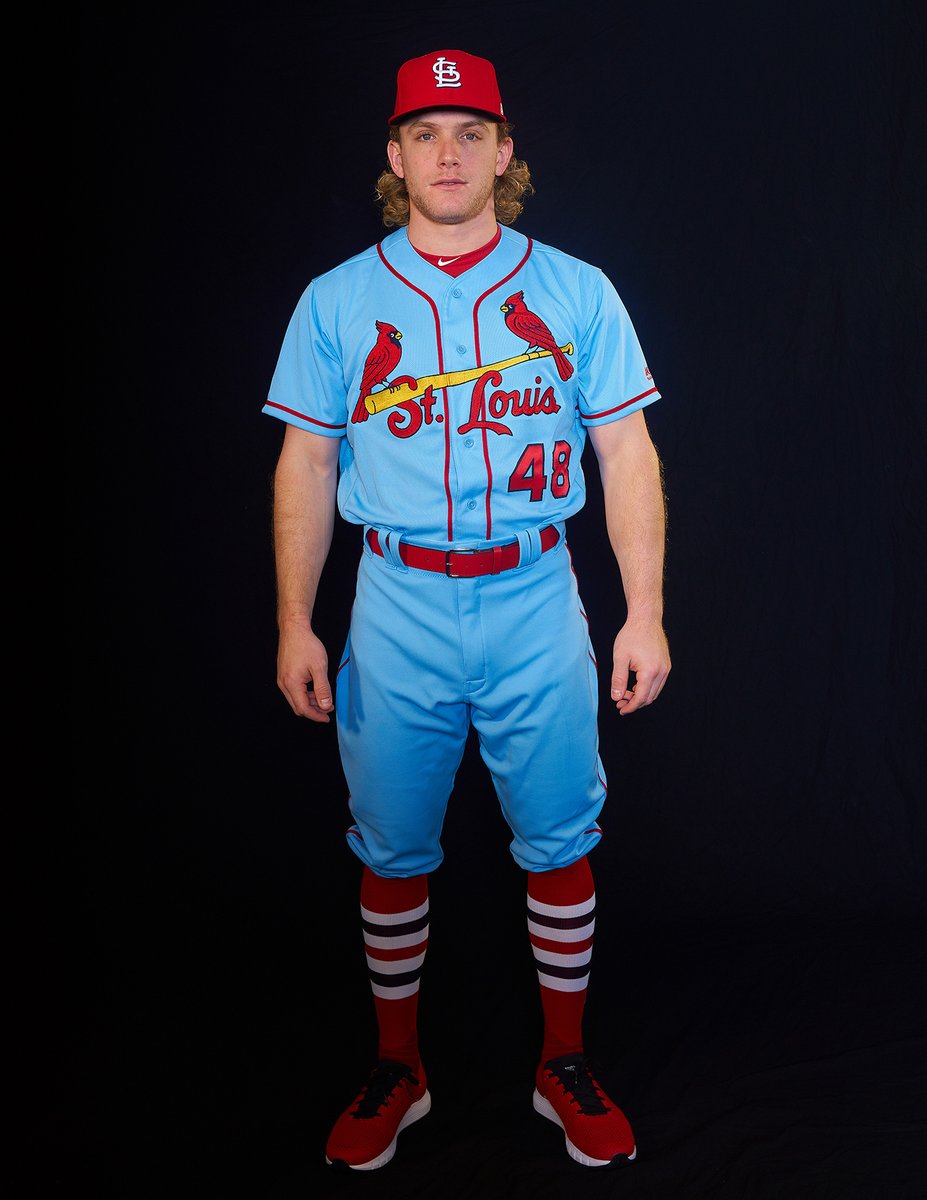
Baseball isn't the only sport with throwback uniforms. But it's the sport where they work the best. And for all the throwback brilliance we've already seen, there's still so much more possible. Hank Aaron-Era blue and white Braves softball jerseys anyone?
Saturday, May 18, 2019
Whose All-Stars Shine Brightest?
One of the oft-forgotten events in the jam-packed sports month known as May is the Artist Formerly Known as The Winston, aka the NASCAR All-Star Race. It's easy to miss, especially since the Sunday of Memorial Day Weekend--with the Grand Prix of Monte Carlo, followed by the Indy 500, and capped by the Coca-Cola 600--is the greatest single day on the calendar for auto racing fans. But The Winston, held on Saturday night the week prior, is one of NASCAR's best events.
The winner gets $1 million. Second place gets nothing. And there are no points at stake, so everyone's going all-out for the million. And it's only the best of the best. None of those random guys you've never heard of that are at the back of the typical field. They have a chance to get in via the qualifying race before the main event, but, for the most part, this is only the big boys. And they have introductions where they all walk out on stage with their pit crew, which is the only time all year that happens.
During the prerace coverage on FS1, they were having a discussion about whether they'd want to win the All-Star Race or a random regular season event. They all chose the All-Star Race and that million. They also argued that NASCAR has the greatest event in sports. It's pretty good, and that $1 million sure gives the drivers plenty of incentive. But the best? That's debatable.
As they said, each sport has its All-Star event. Some of them are great. Some are definitely in need of improvement. But where does NASCAR rank in the grand All-Star scheme? Pretty high actually.
7. Pro Bowl: You know it's bad when even the Commissioner doesn't want to do it. Although, a lot of the reasons why the Pro Bowl sucks can be blamed on the Commissioner. It was his idea to try all those stupid experimental rules. It was his idea to hold it the week before the Super Bowl and make players on the two best teams in the league ineligible. It was his idea to move the game out of Hawaii, where it was always a sellout. Seriously, the only good thing about the Pro Bowl in Orlando is the dodgeball game. I'm glad they didn't discontinue the Pro Bowl (like the Commissioner was threatening a few years ago). But it pales in comparison to the other All-Star Games.
6. NBA: In the Pro Bowl, nobody is allowed to play defense. In the NBA All-Star Game, they simply choose not to. And the result is basically a skills competition where guys are chucking up threes or driving one-on-one. After the West scored nearly 200 points a few years ago, they made some changes that only made things worse. The NHL and NFL both tried that ridiculous "pick your own team" garbage and both realized it was incredibly stupid. Not too stupid for the NBA, though.
5. WNBA: When the NBA changed their all-star format, the WNBA changed theirs, too. So now we're stuck with two "pick your own All-Star team" matchups. Although, since a majority of the better WNBA players and teams are in the West, that change actually resulted in a more competitive game. I still hate the fantasy draft element, though. They don't have a WNBA All-Star Game in Olympic years, so maybe they'll only do it one more time before going back to East-West in 2021.
4. MLS: At first, the MLS All-Star Game was East vs. West. Then they played the U.S. National Team one year, and since 2005, it's been MLS vs. a top team from Europe. This year they're playing Atletico Madrid. That has certainly helped the game's appeal and credibility (so what if it won't be Atletico's A team). And by limiting it to one team covering the entire league, the MLS team only features the absolute best players to that point. Although, with 24 teams (soon to become 27), there's enough talent in MLS for it to go back to showcasing the league's best exclusively. They no longer need the European team to sell tickets. This format has been successful, though, so I'm not sure there's much desire to change it among MLS higher-ups.
3. NASCAR: There are a lot of things that are great about NASCAR's All-Star Race. For starters, they hold it under the lights, which always makes for a better race to watch. And since they have nothing to lose, everybody goes all out, and the result is some exciting racing. I also like that they give the non-All-Stars a chance to qualify through the earlier race (Kyle Larson only got into the All-Star Race through the qualifying race, and he went on to win the $1 million). My only issue with it, though, is that NASCAR's the only sport where you see all of the best go against each other every week regardless of event. So, in that regard, the All-Star Race is just another regular event against the same guys they always see.
2. MLB: I know I'm biased, but I think the original All-Star Game is still pretty close to perfect. It isn't. But it's pretty darn close. Baseball's the sport that lends itself best to the All-Star format, and it's still the greatest showcase the game has. Nothing else is going on in mid-July, so the Midsummer Classic gets the stage to itself. It'll never have the intensity it had during the 60s and 70s again, but that's OK. It's a celebration of the game. And, even though there's nothing at stake now that they've dropped the World Series tie-in, the players always play to win. I know I'm in the minority about this last part, but I like it that every team is represented, too.
1. NHL: It was the NHL that started the whole "pick your own team" nonsense, which pushed the NHL All-Star Game towards the bottom of these rankings for a while. Then in 2017, they got rid of that terrible format and turned it into the best All-Star event in sports. Four teams, one for each division, playing a 3x3 tournament for $1 million. It was one of the smartest things the NHL ever did, and it breathed new life into the event. Throw in the Skills Competition, which has always been the best All-Star showcase event, and you've got an All-Star Weekend that's pretty close to perfect.
Of course, these rankings are entirely subjective. And fans are going to turn out for these events (both in person and on TV) regardless. And isn't that the point? All-Star Games are for the fans. So, from that perspective, they're all great. Flaws and all.
The winner gets $1 million. Second place gets nothing. And there are no points at stake, so everyone's going all-out for the million. And it's only the best of the best. None of those random guys you've never heard of that are at the back of the typical field. They have a chance to get in via the qualifying race before the main event, but, for the most part, this is only the big boys. And they have introductions where they all walk out on stage with their pit crew, which is the only time all year that happens.
During the prerace coverage on FS1, they were having a discussion about whether they'd want to win the All-Star Race or a random regular season event. They all chose the All-Star Race and that million. They also argued that NASCAR has the greatest event in sports. It's pretty good, and that $1 million sure gives the drivers plenty of incentive. But the best? That's debatable.
As they said, each sport has its All-Star event. Some of them are great. Some are definitely in need of improvement. But where does NASCAR rank in the grand All-Star scheme? Pretty high actually.
7. Pro Bowl: You know it's bad when even the Commissioner doesn't want to do it. Although, a lot of the reasons why the Pro Bowl sucks can be blamed on the Commissioner. It was his idea to try all those stupid experimental rules. It was his idea to hold it the week before the Super Bowl and make players on the two best teams in the league ineligible. It was his idea to move the game out of Hawaii, where it was always a sellout. Seriously, the only good thing about the Pro Bowl in Orlando is the dodgeball game. I'm glad they didn't discontinue the Pro Bowl (like the Commissioner was threatening a few years ago). But it pales in comparison to the other All-Star Games.
6. NBA: In the Pro Bowl, nobody is allowed to play defense. In the NBA All-Star Game, they simply choose not to. And the result is basically a skills competition where guys are chucking up threes or driving one-on-one. After the West scored nearly 200 points a few years ago, they made some changes that only made things worse. The NHL and NFL both tried that ridiculous "pick your own team" garbage and both realized it was incredibly stupid. Not too stupid for the NBA, though.
5. WNBA: When the NBA changed their all-star format, the WNBA changed theirs, too. So now we're stuck with two "pick your own All-Star team" matchups. Although, since a majority of the better WNBA players and teams are in the West, that change actually resulted in a more competitive game. I still hate the fantasy draft element, though. They don't have a WNBA All-Star Game in Olympic years, so maybe they'll only do it one more time before going back to East-West in 2021.
4. MLS: At first, the MLS All-Star Game was East vs. West. Then they played the U.S. National Team one year, and since 2005, it's been MLS vs. a top team from Europe. This year they're playing Atletico Madrid. That has certainly helped the game's appeal and credibility (so what if it won't be Atletico's A team). And by limiting it to one team covering the entire league, the MLS team only features the absolute best players to that point. Although, with 24 teams (soon to become 27), there's enough talent in MLS for it to go back to showcasing the league's best exclusively. They no longer need the European team to sell tickets. This format has been successful, though, so I'm not sure there's much desire to change it among MLS higher-ups.
3. NASCAR: There are a lot of things that are great about NASCAR's All-Star Race. For starters, they hold it under the lights, which always makes for a better race to watch. And since they have nothing to lose, everybody goes all out, and the result is some exciting racing. I also like that they give the non-All-Stars a chance to qualify through the earlier race (Kyle Larson only got into the All-Star Race through the qualifying race, and he went on to win the $1 million). My only issue with it, though, is that NASCAR's the only sport where you see all of the best go against each other every week regardless of event. So, in that regard, the All-Star Race is just another regular event against the same guys they always see.
2. MLB: I know I'm biased, but I think the original All-Star Game is still pretty close to perfect. It isn't. But it's pretty darn close. Baseball's the sport that lends itself best to the All-Star format, and it's still the greatest showcase the game has. Nothing else is going on in mid-July, so the Midsummer Classic gets the stage to itself. It'll never have the intensity it had during the 60s and 70s again, but that's OK. It's a celebration of the game. And, even though there's nothing at stake now that they've dropped the World Series tie-in, the players always play to win. I know I'm in the minority about this last part, but I like it that every team is represented, too.
1. NHL: It was the NHL that started the whole "pick your own team" nonsense, which pushed the NHL All-Star Game towards the bottom of these rankings for a while. Then in 2017, they got rid of that terrible format and turned it into the best All-Star event in sports. Four teams, one for each division, playing a 3x3 tournament for $1 million. It was one of the smartest things the NHL ever did, and it breathed new life into the event. Throw in the Skills Competition, which has always been the best All-Star showcase event, and you've got an All-Star Weekend that's pretty close to perfect.
Of course, these rankings are entirely subjective. And fans are going to turn out for these events (both in person and on TV) regardless. And isn't that the point? All-Star Games are for the fans. So, from that perspective, they're all great. Flaws and all.
Subscribe to:
Posts (Atom)