Before Michaels and Collinsworth, before Michaels and Madden, there was Madden and Summerall. For anybody who grew up watching football in the 80s and 90s, they were the voices of the NFL. Growing up, I would always get excited whenever CBS (or later FOX) had the Super Bowl because I knew Pat Summerall was going to do the game. The biggest stage deserves the best. And Pat Summerall was the best.
The great announcers are the modest ones. Vin Scully knows he's great. But he doesn't have an ego. He just goes about his business of calling Los Angeles Dodgers, just as he has for the last 60 years. It was the same thing with Pat Summerall. He was content to fade into the background and let Madden be the star. Only so many people could handle sitting alongside such a personality. Summerall did it with class, grace and dignity. And with a quiet professionalism that was ecplised only by the elegance of his delivery.
Pat Summerall was the voice of a generation. People became football fans because of him. But he was more than just a football announcer. For years, he called both U.S. Open tennis and the Masters for CBS, and he did college football, basketball and baseball games, too. And yet you never got the sense that Summerall was out of his element. He never made the broadcast about him, either. He either let Madden drive the ship or let the event itself do that. He was there to tell the story, not be a part of it.
But for all the events Pat Summerall called, his name will always be synonomous with the Super Bowl. He called a record 26 of them, including the first one. Summerall worked the first half of Super Bowl I in the booth, then moved down to the field and served as a sideline reporter for the second half. His last was Super Bowl XXXVI in 2002, which the Patriots won on Adam Vinatieri's field goal on the final play of the game. Summerall called the final play in the same understated manner he'd called every other play in every other game. But what I'll remember most about Super Bowl XXXVI, which was played only five months after 9/11, was the beautiful tribute narrated by Summerall that opened the broadcast. Poignant and beautiful. Just like the man himself.
When FOX took over the NFC package from CBS in 1994, one of their first moves was to lock up the services of Pat Summerall. There were fears that they'd try to establish their own guy as the voice of the NFL on FOX. But they knew NFL fans wanted that familiar voice. They also knew that football fans couldn't picture John Madden calling games with anyone else (until he joined together with Al Michaels, of course). And that they needed credibility. FOX made the right call on all fronts. Because Pat Summerall did all of that.
Perhaps the most amazing part of Pat Summerall's brilliant career, though, is the fact that he was the rare announcer who started as a player and became a play-by-play guy. Usually the former players become analysts, and you can tell they're out of their comfort zone when calling an unfamiliar sport. The play-by-play guys are supposed to be the "professional" broadcasters. Doing play-by-play is hard. Yet Pat Summerall could move effortlessly from football to tennis to golf to basketball to whatever without ever missing a beat. Not only that, he was one of the best at it. That's a natural gift.
Pat Summerall never felt out of place calling anything, and, as a result, he made viewers feel comfortable. His style was so effortless that it put everyone at ease. Yet it was so distinct at the same time. You always knew when you were listening to Pat Summerall. And you knew you were going to enjoy the broadcast. Madden was your crazy uncle. Summerall was your wise grandfather telling you stories about when he was your age. For some reason, that worked perfectly.
He'll probably be remembered most as John Madden's broadcast partner. And for all those Super Bowls, but those aren't the only NFL Championship Games Pat Summerall was involved in during his brilliant career. He was a kicker for the Cardinals and Giants, and he was on that Giants team that lost to the Baltimore Colts in "The Greatest Game Ever Played" in 1958.
It's safe to say that the NFL wouldn't be anywhere near as popular it is today without Pat Summerall. Even though he hasn't called games regularly in 10 years, he's still as much a part of the fabric of the NFL as ever. The NFL has lost a legend. So has the entire profession of sports broadcasting. Pat Summerall was in a class of his own. A truly one-of-a-kind figure. He'll be missed, but it's comforting to know that he'll also be fondly remembered. Just like every legend should.
Wednesday, April 17, 2013

Monday, April 15, 2013
Numbers That Should/Will Be Retired
As we celebrate Jackie Robinson Day and the release of "42," every team in the Major Leagues once again full of 42's for one day (I've made my feelings on that well-known). Of course, the Yankees are the only team that has a No. 42 every day of the year, but that's going to change next season, when April 15 becomes the only time you'll ever see the number 42 worn on a Major League field again.
Mariano Rivera has been the only No. 42 in the Majors for quite some time. It was retired across baseball for Jackie Robinson in 1997. And it goes without saying that, whether required to retire it or not, no Yankee will ever wear No. 42 regularly again come next season. In fact, I think it would be cool if they offically retire Mariano's number on this day next year. I think Jackie Robinson would agree that would be appropriate.
While Mariano and Derek Jeter are the two most obvious examples of active Major Leaguers who should/will have their numbers retired once their careers end, they aren't the only ones. There are plenty of active or recently retired players who are so synonymous with a given club that a number retirement ceremony feels like it should be a given. A lot of these probably will happen, but some won't for whatever reason. That doesn't mean they shouldn't. (And sorry Wade Boggs, the Red Sox retiring your No. 26 doesn't qualify, so stop whining about it.)
Here's a list of the teams that have one or more numbers that I think should/will be retired, ranked by level of likelihood (*-locks):
ARIZONA DIAMONDBACKS
51-Randy Johnson*, 38-Curt Schilling
ATLANTA BRAVES
10-Chipper Jones*
BOSTON RED SOX
A lot of people want Nomar, but I don't think he quite makes the cut. Just like Wade Boggs.
34-David Ortiz, 45-Pedro Martinez, 24-Manny Ramirez, 21-Roger Clemens, 33-Jason Varitek, 38-Curt Schilling
CHICAGO WHITE SOX
14-Paul Konerko
CINCINNATI REDS
14-Pete Rose (They're officially not allowed to retire it because of his lifetime ban from baseball.)
CLEVELAND INDIANS
25-Jim Thome
COLORADO ROCKIES
17-Todd Helton*, 33-Larry Walker* (The Rockies are probably waiting for Helton to retire to make him the first one.)
DETROIT TIGERS
35-Justin Verlander*, 24-Miguel Cabrera, 3-Alan Trammell
HOUSTON ASTROS
17-Lance Berkman
LOS ANGELES DODGERS
34-Fernando Valenzuela
MILWAUKEE BREWERS
8-Ryan Braun*
MINNESOTA TWINS
7-Joe Mauer*, 33-Justin Morneau
NEW YORK METS
17-Keith Hernandez, 8-Gary Carter, 5-David Wright, 31-Mike Piazza, 16-Dwight Gooden, 18-Darryl Strawberry
NEW YORK YANKEES
42-Mariano Rivera*, 2-Derek Jeter*, 6-Joe Torre*, 51-Bernie Williams*, 21-Paul O'Neill, 46-Andy Pettitte, 20-Jorge Posada
OAKLAND ATHLETICS
25-Mark McGwire, 33-Jose Canseco
SAN FRANCISCO GIANTS
25-Barry Bonds (They should be embarrassed that it isn't yet), 21-Jeff Kent, 18-Matt Cain, 28-Buster Posey, 55-Tim Lincecum
SEATTLE MARINERS
I'm not really sure why, but the Mariners have never retired a number. Whatever critera they use, though, needs to change. Because Ken Griffey Jr.'s No. 24 should already be retired.
24-Ken Griffey Jr., 11-Edgar Martinez, 51-Randy Johnson, 51-Ichiro Suzuki, 21-Alvin Davis, 14-Lou Piniella, 19-Jay Buhner, 34-Felix Hernandez, 3-Alex Rodriguez
ST. LOUIS CARDINALS
5-Albert Pujols*, 29-Chris Carpenter
TAMPA BAY RAYS
3-Evan Longoria*
TEXAS RANGERS
7-Ivan Rodriguez*, 10-Michael Young*, 32-Josh Hamilton, 19-Juan Gonzalez
TORONTO BLUE JAYS
29-Joe Carter*, 37-Dave Stieb
Mariano Rivera has been the only No. 42 in the Majors for quite some time. It was retired across baseball for Jackie Robinson in 1997. And it goes without saying that, whether required to retire it or not, no Yankee will ever wear No. 42 regularly again come next season. In fact, I think it would be cool if they offically retire Mariano's number on this day next year. I think Jackie Robinson would agree that would be appropriate.
While Mariano and Derek Jeter are the two most obvious examples of active Major Leaguers who should/will have their numbers retired once their careers end, they aren't the only ones. There are plenty of active or recently retired players who are so synonymous with a given club that a number retirement ceremony feels like it should be a given. A lot of these probably will happen, but some won't for whatever reason. That doesn't mean they shouldn't. (And sorry Wade Boggs, the Red Sox retiring your No. 26 doesn't qualify, so stop whining about it.)
Here's a list of the teams that have one or more numbers that I think should/will be retired, ranked by level of likelihood (*-locks):
ARIZONA DIAMONDBACKS
51-Randy Johnson*, 38-Curt Schilling
ATLANTA BRAVES
10-Chipper Jones*
BOSTON RED SOX
A lot of people want Nomar, but I don't think he quite makes the cut. Just like Wade Boggs.
34-David Ortiz, 45-Pedro Martinez, 24-Manny Ramirez, 21-Roger Clemens, 33-Jason Varitek, 38-Curt Schilling
CHICAGO WHITE SOX
14-Paul Konerko
CINCINNATI REDS
14-Pete Rose (They're officially not allowed to retire it because of his lifetime ban from baseball.)
CLEVELAND INDIANS
25-Jim Thome
COLORADO ROCKIES
17-Todd Helton*, 33-Larry Walker* (The Rockies are probably waiting for Helton to retire to make him the first one.)
DETROIT TIGERS
35-Justin Verlander*, 24-Miguel Cabrera, 3-Alan Trammell
HOUSTON ASTROS
17-Lance Berkman
LOS ANGELES DODGERS
34-Fernando Valenzuela
MILWAUKEE BREWERS
8-Ryan Braun*
MINNESOTA TWINS
7-Joe Mauer*, 33-Justin Morneau
NEW YORK METS
17-Keith Hernandez, 8-Gary Carter, 5-David Wright, 31-Mike Piazza, 16-Dwight Gooden, 18-Darryl Strawberry
NEW YORK YANKEES
42-Mariano Rivera*, 2-Derek Jeter*, 6-Joe Torre*, 51-Bernie Williams*, 21-Paul O'Neill, 46-Andy Pettitte, 20-Jorge Posada
OAKLAND ATHLETICS
25-Mark McGwire, 33-Jose Canseco
SAN FRANCISCO GIANTS
25-Barry Bonds (They should be embarrassed that it isn't yet), 21-Jeff Kent, 18-Matt Cain, 28-Buster Posey, 55-Tim Lincecum
SEATTLE MARINERS
I'm not really sure why, but the Mariners have never retired a number. Whatever critera they use, though, needs to change. Because Ken Griffey Jr.'s No. 24 should already be retired.
24-Ken Griffey Jr., 11-Edgar Martinez, 51-Randy Johnson, 51-Ichiro Suzuki, 21-Alvin Davis, 14-Lou Piniella, 19-Jay Buhner, 34-Felix Hernandez, 3-Alex Rodriguez
ST. LOUIS CARDINALS
5-Albert Pujols*, 29-Chris Carpenter
TAMPA BAY RAYS
3-Evan Longoria*
TEXAS RANGERS
7-Ivan Rodriguez*, 10-Michael Young*, 32-Josh Hamilton, 19-Juan Gonzalez
TORONTO BLUE JAYS
29-Joe Carter*, 37-Dave Stieb
Thursday, April 11, 2013
Not BCS, But Not Mid-Major Either
My beloved Big East sure went out with a bang, didn't it? Two national titles. Five teams in the Final Four. And not a single one of them is going to be a member of the conference come July. Thanks BCS. Thanks a lot.
The breakup of the Big East, of course, creates two brand-new conferences, one of which will keep the Big East name. It also brings up an interesting question: Will the Big East (both old and new) now be considered a mid-major conference? Neither one will be at the same level as the Big East once was. Neither will come close to being far-and-away the best conference in college basketball, which the Big East has been for several years running. But I think it's a stretch to say that both leagues (or either) would be considered a mid-major. Not with the teams comprising the two conferences.
Let's start by taking a look at the new Big East. Of the 10 teams that will make up the league, three (Georgetown, Villanova, Marquette) have won National Championships, three others have played in National Championship Games (Butler, St. John's, Seton Hall), and two more (DePaul, Providence) have been to the Final Four at least once. That leaves just two of the 10 members (Xavier, Creighton) that have never been, although Xavier reached the Elite Eight as recently as 2008. And if, as expected, Dayton joins the Big East in 2014, that's another school with a Final Four on its resume that you can add to the list.
In fact, I'd argue that's a better basketball conference than the American Athletic Conference, which is the name that has been chosen for when the old Big East rebrands itself. (Still lukewarm on the name, but it could've been much worse.) Now, both of this season's National Champions will be members of the AAC come July, but for Louisville it's a one-year stopgap before they join the ACC (I already know that's going to get confusing). As for the teams that will be AAC members in 2014-15 and beyond, only UConn and Cincinnati have won national titles, although Cincinnati's came 50 years ago when Oscar Robertson was their star. UConn, Cincinnati, Temple and Memphis are the only schools in the conference that have any sort of national relevance in the last 10 years.
But the bottom of the AAC is going to be really, really bad. East Carolina? Tulane? Central Florida? SMU? (Although, I do think Larry Brown is going to make them at least competitive.) I have a feeling the AAC will be very top-heavy, with UConn, Cincinnati, Temple and Memphis dominating every year, with Tulsa a potential sleeper. Sure you'll get a decent Houston or South Florida team that makes the Tournament once every couple of years, but let's face it, the AAC has four programs. The Big East has at least six, if not seven or eight.
So what does this all mean? The Big East will most certainly lose its lofty status as the King of College Basketball. The seven or eight Tournament berths that became commonplace in the 16-team era are a thing of the past. But it won't suddenly get relegated to mid-major status either. Same thing with the AAC. While it will clearly be the weaker of the two leagues, there are still enough nationally significant programs to think the AAC will manage to claim multiple Tournament berths every year. For that reason, I can't in my heart call it a true "mid-major."
I've never liked that "high major," "mid-major," "low major" classification system. I think it's too restrictive. Leagues like the Mountain West and Atlantic 10 aren't mid-majors. But they aren't high majors either. The high majors are the five BCS leagues, the ones responsible for all this realignment nonsense. The Big East used to be the sixth high major. But you want to tell me that a league that good that plays its tournametn in Madison Square Garden is a mid-major? Not buying it.
I think there needs to be a fourth category. One between "high major" and "mid-major." I like to call it "major." Conferences with schools that are nationally relevant and are more likely than not to put multiple teams in the Tournament every year. That's where both the Big East and AAC should fall, joining the ranks of the Mountain West and Atlantic 10. Conference USA used to be in this group, as well, but with every significant Conference USA member now a part of one Big East or the other, that league I think has now become a true "mid-major."
Same thing with the West Coast Conference, which, thanks to Gonzaga, is perhaps the best mid-major in the country. Ditto with the Missouri Valley Conference, which landed Wichita State in the Final Four, but is losing Creighton to Big East 2.0. The CAA, WAC, Sun Belt and Horizon League also fall into this category, along with a couple other leagues. Basically, those that have a team that either gets or is in the discussion for an at-large berth. Everybody else, meanwhile, is a low major. The so-called "one-bid" leagues.
With the Big East being stripped for parts, most people expect a significant drop-off and an even greater disparity between the Big Five (ACC, Big Ten, Big 12, Pac-12, SEC) and everybody else. But don't count the Big East out just yet. It was left for dead and rose from the ashes before. I'm not saying it's definitely going to happen again. But don't be surprised if (or, shall I say, when) it does. The original Big East was a radical idea when Dave Gavitt created it. And it turned into the greatest college basketball conference that ever existed.
The breakup of the Big East, of course, creates two brand-new conferences, one of which will keep the Big East name. It also brings up an interesting question: Will the Big East (both old and new) now be considered a mid-major conference? Neither one will be at the same level as the Big East once was. Neither will come close to being far-and-away the best conference in college basketball, which the Big East has been for several years running. But I think it's a stretch to say that both leagues (or either) would be considered a mid-major. Not with the teams comprising the two conferences.
Let's start by taking a look at the new Big East. Of the 10 teams that will make up the league, three (Georgetown, Villanova, Marquette) have won National Championships, three others have played in National Championship Games (Butler, St. John's, Seton Hall), and two more (DePaul, Providence) have been to the Final Four at least once. That leaves just two of the 10 members (Xavier, Creighton) that have never been, although Xavier reached the Elite Eight as recently as 2008. And if, as expected, Dayton joins the Big East in 2014, that's another school with a Final Four on its resume that you can add to the list.
In fact, I'd argue that's a better basketball conference than the American Athletic Conference, which is the name that has been chosen for when the old Big East rebrands itself. (Still lukewarm on the name, but it could've been much worse.) Now, both of this season's National Champions will be members of the AAC come July, but for Louisville it's a one-year stopgap before they join the ACC (I already know that's going to get confusing). As for the teams that will be AAC members in 2014-15 and beyond, only UConn and Cincinnati have won national titles, although Cincinnati's came 50 years ago when Oscar Robertson was their star. UConn, Cincinnati, Temple and Memphis are the only schools in the conference that have any sort of national relevance in the last 10 years.
But the bottom of the AAC is going to be really, really bad. East Carolina? Tulane? Central Florida? SMU? (Although, I do think Larry Brown is going to make them at least competitive.) I have a feeling the AAC will be very top-heavy, with UConn, Cincinnati, Temple and Memphis dominating every year, with Tulsa a potential sleeper. Sure you'll get a decent Houston or South Florida team that makes the Tournament once every couple of years, but let's face it, the AAC has four programs. The Big East has at least six, if not seven or eight.
So what does this all mean? The Big East will most certainly lose its lofty status as the King of College Basketball. The seven or eight Tournament berths that became commonplace in the 16-team era are a thing of the past. But it won't suddenly get relegated to mid-major status either. Same thing with the AAC. While it will clearly be the weaker of the two leagues, there are still enough nationally significant programs to think the AAC will manage to claim multiple Tournament berths every year. For that reason, I can't in my heart call it a true "mid-major."
I've never liked that "high major," "mid-major," "low major" classification system. I think it's too restrictive. Leagues like the Mountain West and Atlantic 10 aren't mid-majors. But they aren't high majors either. The high majors are the five BCS leagues, the ones responsible for all this realignment nonsense. The Big East used to be the sixth high major. But you want to tell me that a league that good that plays its tournametn in Madison Square Garden is a mid-major? Not buying it.
I think there needs to be a fourth category. One between "high major" and "mid-major." I like to call it "major." Conferences with schools that are nationally relevant and are more likely than not to put multiple teams in the Tournament every year. That's where both the Big East and AAC should fall, joining the ranks of the Mountain West and Atlantic 10. Conference USA used to be in this group, as well, but with every significant Conference USA member now a part of one Big East or the other, that league I think has now become a true "mid-major."
Same thing with the West Coast Conference, which, thanks to Gonzaga, is perhaps the best mid-major in the country. Ditto with the Missouri Valley Conference, which landed Wichita State in the Final Four, but is losing Creighton to Big East 2.0. The CAA, WAC, Sun Belt and Horizon League also fall into this category, along with a couple other leagues. Basically, those that have a team that either gets or is in the discussion for an at-large berth. Everybody else, meanwhile, is a low major. The so-called "one-bid" leagues.
With the Big East being stripped for parts, most people expect a significant drop-off and an even greater disparity between the Big Five (ACC, Big Ten, Big 12, Pac-12, SEC) and everybody else. But don't count the Big East out just yet. It was left for dead and rose from the ashes before. I'm not saying it's definitely going to happen again. But don't be surprised if (or, shall I say, when) it does. The original Big East was a radical idea when Dave Gavitt created it. And it turned into the greatest college basketball conference that ever existed.
Wednesday, April 10, 2013
The Olympics' Proposed New Events
I haven't seen the complete list of new events that have been proposed for the Rio Olympics. But from the list I have seen, I've definitely been able to form an opinion. I think some of the proposed new events would be wonderful additions to the Olympic program, some are good ideas that simply wouldn't be feasible, and the rest range from stupid to unnecessary. There are also a few events that haven't been proposed, but I wouldn't mind seeing added to the Olympics anyway. Call that my wish list. (It goes without saying that my wish list includes the entire sport of wrestling.)
FINA, the governing body for swimming and the other aquatic sports, was one of the most aggressive federations when it came to proposing new events. They want to add eight events to the swimming program: the 50 meter backstroke, 50 meter butterfly and 50 meter breaststroke for men and women, as well as the men's 800 and women's 1500. I've got no problem with any of these events. They've all been a part of the World Championships for a while, and adding them to the program wouldn't require any additional athletes or days to the program. (They currently have four finals a night over eight nights of competition, so it wouldn't be hard to add a final a night.) Most importantly, swimming is one of the most popular sports in the Summer Olympics, both in terms of attendance and TV ratings. It wouldn't surprise me in the slightest if they find a way to add more swimming.
They've also suggested increasing the women's water polo field from eight teams to 12. Again, no issues here. The men's water polo tournament already includes 12 teams. Although, I'm not sure the world is competitive enough for an additional four teams. I'm also not sure the IOC would be too eager to add 60 athletes in a team sport that doesn't create any additional medal opportunities. Likewise, they want more teams in synchronized swimming, as well as more individuals in diving and open water swimming. Whatever. That's fine.
Beach volleyball is another wildly popular Summer Olympic sport. With the iconic Copacabana Beach serving as the venue, it promises to be one of the marquee sports in Rio. They want to capitalize on their popularity by increasing the field from 24 teams to 32. While this seems incredibly easy to do, I'm not sure it works logistically. With 24 teams, that means they play 12 matches a day. They can't play 16 matches in one day on the same court, so they'd probably need a second beach volleyball stadium if they increased the field. That's why I'm not sure it's a great idea. I have an alternate solution: 48 women's teams, 0 men's teams. I bet very few people would object to that.
Cycling wants to add some sort of mountain biking event with four riders that I think is probably similar to snowboard cross from the Winter Olympics, as well as BMX freestyle, neither of which I really quite understand. I can see one or both of these events being added because the IOC is always going after a younger demographic, but the Olympics doesn't need either one. Nor do they need 3-on-3 basketball. The regular version is an Olympic staple. I'm not sure the 3-on-3 version would go over as well as they think it would.
That's on the list because it had a successful tryout at the 2010 Youth Olympics. So are mixed-team events in sports like archery and triathlon. Gender equity is an important issue within the IOC, so I wouldn't be surprised to see those added if they can find a format that works. The mixed relay in biathlon, with two men and two women per country, will make its Olympic debut in Sochi. A mixed team event in archery could be set up the same way, and I think it would make for a great addition.
In equestrian, they eventually want to add a fourth discipline (endurance), but first they're going to settle with reallocating their current allotment of athletes. They want to move 10 riders from the eventing competition to the dressage competition so that they can keep their numbers consistent across the three disciplines. They've had four-member national teams in jumping (which is the most popular equestrian event) for a while and want the other two events to have that same number. Makes perfect sense to me.
There are two federations that I'm surprised didn't make any new event proposals, though: the FIG (gymnastics) and the IAAF (track & field). While it may seem like there aren't any events left to add in either one of those sports, I disagree. And those events top my wish list.
I'd love to see cross country added to the Olympic track & field program. Anyone who's ever run it knows that cross country is nothing like running laps on a track, and with the stadium track program full (there are 24 events for men and 23 for women), cross country's the only track & field event that would be logical to add. It's not unprecedented. Cross country was in the Olympics way back when, and the great Paavo Nurmi won four of his nine career Olympic gold medals in cross country.
Besides, track & field is the biggest and most popular sport in the Olympics, and World Cross Country Championships are one of the IAAF's biggest events. It's an easy way to add four medal events (individual and team, men and women) without drastically increasing the number of athletes. Scheduling would also be easy. You could have it on the Monday and Tuesday or Tuesday and Wednesday of the first week, before the main track & field program begins on that middle weekend. They also wouldn't need to build a venue. Cross country could be held on the same course used for the mountain biking races.
As for gymnastics, I'm not talking about artistic gymnastics. It's rhythmic gymnastics where I'd like to see some added events. They currently only award two gold medals in rhythmic gymnastics: individual all-around and team. In artistic gymnastics, they award gold medals in each individual apparatus, as well as the all-around and team. Why not in rhythmic? Individual apparatus finals would be four additional gold medals up for grabs without having to increase the number of athletes competing at all. And you would add one day, maybe two, to the competition. You could set it up just like artistic where the first day is strictly qualifying, then finals for the all-around, apparati and team.
Rio, of course, marks the return of golf and rugby to the Olympics. I have no doubt that some or all of the events on the list that went to the IOC yesterday will join them. But some have more of a place in the Olympics than others.
FINA, the governing body for swimming and the other aquatic sports, was one of the most aggressive federations when it came to proposing new events. They want to add eight events to the swimming program: the 50 meter backstroke, 50 meter butterfly and 50 meter breaststroke for men and women, as well as the men's 800 and women's 1500. I've got no problem with any of these events. They've all been a part of the World Championships for a while, and adding them to the program wouldn't require any additional athletes or days to the program. (They currently have four finals a night over eight nights of competition, so it wouldn't be hard to add a final a night.) Most importantly, swimming is one of the most popular sports in the Summer Olympics, both in terms of attendance and TV ratings. It wouldn't surprise me in the slightest if they find a way to add more swimming.
They've also suggested increasing the women's water polo field from eight teams to 12. Again, no issues here. The men's water polo tournament already includes 12 teams. Although, I'm not sure the world is competitive enough for an additional four teams. I'm also not sure the IOC would be too eager to add 60 athletes in a team sport that doesn't create any additional medal opportunities. Likewise, they want more teams in synchronized swimming, as well as more individuals in diving and open water swimming. Whatever. That's fine.
Beach volleyball is another wildly popular Summer Olympic sport. With the iconic Copacabana Beach serving as the venue, it promises to be one of the marquee sports in Rio. They want to capitalize on their popularity by increasing the field from 24 teams to 32. While this seems incredibly easy to do, I'm not sure it works logistically. With 24 teams, that means they play 12 matches a day. They can't play 16 matches in one day on the same court, so they'd probably need a second beach volleyball stadium if they increased the field. That's why I'm not sure it's a great idea. I have an alternate solution: 48 women's teams, 0 men's teams. I bet very few people would object to that.
Cycling wants to add some sort of mountain biking event with four riders that I think is probably similar to snowboard cross from the Winter Olympics, as well as BMX freestyle, neither of which I really quite understand. I can see one or both of these events being added because the IOC is always going after a younger demographic, but the Olympics doesn't need either one. Nor do they need 3-on-3 basketball. The regular version is an Olympic staple. I'm not sure the 3-on-3 version would go over as well as they think it would.
That's on the list because it had a successful tryout at the 2010 Youth Olympics. So are mixed-team events in sports like archery and triathlon. Gender equity is an important issue within the IOC, so I wouldn't be surprised to see those added if they can find a format that works. The mixed relay in biathlon, with two men and two women per country, will make its Olympic debut in Sochi. A mixed team event in archery could be set up the same way, and I think it would make for a great addition.
In equestrian, they eventually want to add a fourth discipline (endurance), but first they're going to settle with reallocating their current allotment of athletes. They want to move 10 riders from the eventing competition to the dressage competition so that they can keep their numbers consistent across the three disciplines. They've had four-member national teams in jumping (which is the most popular equestrian event) for a while and want the other two events to have that same number. Makes perfect sense to me.
There are two federations that I'm surprised didn't make any new event proposals, though: the FIG (gymnastics) and the IAAF (track & field). While it may seem like there aren't any events left to add in either one of those sports, I disagree. And those events top my wish list.
I'd love to see cross country added to the Olympic track & field program. Anyone who's ever run it knows that cross country is nothing like running laps on a track, and with the stadium track program full (there are 24 events for men and 23 for women), cross country's the only track & field event that would be logical to add. It's not unprecedented. Cross country was in the Olympics way back when, and the great Paavo Nurmi won four of his nine career Olympic gold medals in cross country.
Besides, track & field is the biggest and most popular sport in the Olympics, and World Cross Country Championships are one of the IAAF's biggest events. It's an easy way to add four medal events (individual and team, men and women) without drastically increasing the number of athletes. Scheduling would also be easy. You could have it on the Monday and Tuesday or Tuesday and Wednesday of the first week, before the main track & field program begins on that middle weekend. They also wouldn't need to build a venue. Cross country could be held on the same course used for the mountain biking races.
As for gymnastics, I'm not talking about artistic gymnastics. It's rhythmic gymnastics where I'd like to see some added events. They currently only award two gold medals in rhythmic gymnastics: individual all-around and team. In artistic gymnastics, they award gold medals in each individual apparatus, as well as the all-around and team. Why not in rhythmic? Individual apparatus finals would be four additional gold medals up for grabs without having to increase the number of athletes competing at all. And you would add one day, maybe two, to the competition. You could set it up just like artistic where the first day is strictly qualifying, then finals for the all-around, apparati and team.
Rio, of course, marks the return of golf and rugby to the Olympics. I have no doubt that some or all of the events on the list that went to the IOC yesterday will join them. But some have more of a place in the Olympics than others.
Monday, April 8, 2013
The Rutgers Fallout
It's been a few days since Rutgers fired men's basketball coach Mike Rice, but the dust has only just begun to settle. And this isn't even close to being done. That's not going to happen for a while. Rutgers basketball has never been any good. Moving into the Big Ten at the heart of a scandal is a recipe for a lot of long years for the Scarlet Knights.
Mike Rice should've been fired in December. Most people thought that when news of the video and his subsequent fine/suspension first broke. After "Outside the Lines" got their hands on it and made the video public, Rutgers had no choice. It came three months late, but Rice had to go. That type of behavior is completely unacceptable. Had it first come to light at any time other than the middle of the season, I'm sure he would've been fired right then and there. But for whatever reason, Rice was allowed to continue his duties. Who knows how much longer they would've allowed him to coach if not for ESPN? As much as people like to pile on ESPN sometimes, I think in this situation we owe them a huge debt of thanks. If not for ESPN obtaining the video and the public outcry that ensued, would the university have even taken action at all?
What I'm saying here is that Mike Rice isn't the only one who should be shouldering the blame here. Former AD Tim Pernetti knows that. The gift of hindsight is 20-20, but Pernetti now knows that he made a terrible mistake by not firing Rice then and there. That's why he's the former AD. Whether or not he was forced to resign isn't relevant. (Although, the favorable conditions in his settlement with Rutgers sure makes it look like the decision was his.) Bottom line is it's the only choice he had.
Yes, Pernetti did great things for Rutgers University. He got them into the Big Ten. He made them nationally relevant in a number of sports. But this wasn't going to go away, and it was forever going to mar the remainder of his tenure. One mistake is enough to wipe out a career's worth of good. Just ask the Paterno family about that.
The blame doesn't stop there, either, though. Some are calling for Rutgers President Robert Barchi's resignation/dismissal as well. Because his role in all of this is just as suspect. He admitted to agreeing with the original suspension, stating that it wasn't a fireable offense. But he also admitted that he didn't watch the video. Wouldn't you make it a point to watch the video yourself? Especially when it's a sport as high-profile as basketball, wouldn't you want to see it just to be sure? While I'm not sure of his level of involvement/knowledge of the situation, Barchi's lack of action shows, if nothing else, poor leadership.
While not even close to anything approaching the same level, there are a lot of similarities between Rutgers and future conference mate Penn State. The Penn State scandal brought down a legendary coach, as well as the athletic director, school president and a few others. I'm not comparing the severity of the two scandals (Penn State was repeated federal crimes, that's far worse), but the Penn State president was fired for his inaction. It's a completely reasonable argument to say that Barchi should be fired for the same reason.
In an attempt to save face, Barchi has announced that he's going to review practice video from every team to see if there was any similar behavior from other coaches. This isn't just too little, too late. It's completely ridiculous. Coaches can be hard on their players and push them in practice without crossing the line. Is he going to start nitpicking and completely overreact when he sees one of the football coaches getting in a player's face? It wouldn't surprise me. Although, I find it more likely that all of those practice videos will show absolutely no inappropriate behavior by other Rutgers coaches.
And how about Eric Murdock? He'll, of course, always be known as the whistleblower. His chances of ever coaching Division I college basketball again range from minimal to nonexistent. You have to wonder if any of this ever would've come to light had he never been fired by Rutgers. Probably not, which is the saddest commentary of all. Some are criticizing Murdock for taping the practices, but that's commonplace in Divison I basketball, so, even if Murdock hadn't taped it, somebody would've. And somebody eventually would've seen it. And even that doesn't change the fact that Rutgers knew and was going to let Rice off with a slap on the wrist.
Rutgers isn't going to be able to move away from the Mike Rice scandal for quite some time. First and foremost, they have to hire a new coach, a task that falls to interim AD Carl Kirschner. That new coach will then have to convince the players that Mike Rice abused to stay at Rutgers. (You know some of them are going to transfer.) Then there's that lame-duck year in the Old Big East before becoming the Big Ten whipping boys in 2014-15.
So, in conclusion, was the Mike Rice Era worth it? Definitely not. A 44-51 record in three years, and they never finished higher than 11th in the Big East. But, as it turns out, the team's performance on the court wasn't the real disgrace. No. That would be the man who embarrassed the university as much as himself with his behavior. Behavior for which there's no place in sports at any level.
Mike Rice should've been fired in December. Most people thought that when news of the video and his subsequent fine/suspension first broke. After "Outside the Lines" got their hands on it and made the video public, Rutgers had no choice. It came three months late, but Rice had to go. That type of behavior is completely unacceptable. Had it first come to light at any time other than the middle of the season, I'm sure he would've been fired right then and there. But for whatever reason, Rice was allowed to continue his duties. Who knows how much longer they would've allowed him to coach if not for ESPN? As much as people like to pile on ESPN sometimes, I think in this situation we owe them a huge debt of thanks. If not for ESPN obtaining the video and the public outcry that ensued, would the university have even taken action at all?
What I'm saying here is that Mike Rice isn't the only one who should be shouldering the blame here. Former AD Tim Pernetti knows that. The gift of hindsight is 20-20, but Pernetti now knows that he made a terrible mistake by not firing Rice then and there. That's why he's the former AD. Whether or not he was forced to resign isn't relevant. (Although, the favorable conditions in his settlement with Rutgers sure makes it look like the decision was his.) Bottom line is it's the only choice he had.
Yes, Pernetti did great things for Rutgers University. He got them into the Big Ten. He made them nationally relevant in a number of sports. But this wasn't going to go away, and it was forever going to mar the remainder of his tenure. One mistake is enough to wipe out a career's worth of good. Just ask the Paterno family about that.
The blame doesn't stop there, either, though. Some are calling for Rutgers President Robert Barchi's resignation/dismissal as well. Because his role in all of this is just as suspect. He admitted to agreeing with the original suspension, stating that it wasn't a fireable offense. But he also admitted that he didn't watch the video. Wouldn't you make it a point to watch the video yourself? Especially when it's a sport as high-profile as basketball, wouldn't you want to see it just to be sure? While I'm not sure of his level of involvement/knowledge of the situation, Barchi's lack of action shows, if nothing else, poor leadership.
While not even close to anything approaching the same level, there are a lot of similarities between Rutgers and future conference mate Penn State. The Penn State scandal brought down a legendary coach, as well as the athletic director, school president and a few others. I'm not comparing the severity of the two scandals (Penn State was repeated federal crimes, that's far worse), but the Penn State president was fired for his inaction. It's a completely reasonable argument to say that Barchi should be fired for the same reason.
In an attempt to save face, Barchi has announced that he's going to review practice video from every team to see if there was any similar behavior from other coaches. This isn't just too little, too late. It's completely ridiculous. Coaches can be hard on their players and push them in practice without crossing the line. Is he going to start nitpicking and completely overreact when he sees one of the football coaches getting in a player's face? It wouldn't surprise me. Although, I find it more likely that all of those practice videos will show absolutely no inappropriate behavior by other Rutgers coaches.
And how about Eric Murdock? He'll, of course, always be known as the whistleblower. His chances of ever coaching Division I college basketball again range from minimal to nonexistent. You have to wonder if any of this ever would've come to light had he never been fired by Rutgers. Probably not, which is the saddest commentary of all. Some are criticizing Murdock for taping the practices, but that's commonplace in Divison I basketball, so, even if Murdock hadn't taped it, somebody would've. And somebody eventually would've seen it. And even that doesn't change the fact that Rutgers knew and was going to let Rice off with a slap on the wrist.
Rutgers isn't going to be able to move away from the Mike Rice scandal for quite some time. First and foremost, they have to hire a new coach, a task that falls to interim AD Carl Kirschner. That new coach will then have to convince the players that Mike Rice abused to stay at Rutgers. (You know some of them are going to transfer.) Then there's that lame-duck year in the Old Big East before becoming the Big Ten whipping boys in 2014-15.
So, in conclusion, was the Mike Rice Era worth it? Definitely not. A 44-51 record in three years, and they never finished higher than 11th in the Big East. But, as it turns out, the team's performance on the court wasn't the real disgrace. No. That would be the man who embarrassed the university as much as himself with his behavior. Behavior for which there's no place in sports at any level.
Friday, April 5, 2013
75 Years of the Final Four
This weekend is a celebration of college basketball in more ways than one. It's not just the Final Four or the Big East's last stand (even though it's both). This year's Final Four is different. It's the 75th anniversary of March Madness. It's truly a celebration of all the great teams and great players and great coaches and great games that have made March Madness what it is.
This Final Four is a perfect example of all those things. You have one of college basketball's marquee programs in Louisville and two great coaches in Rick Pitino and Jim Boeheim. Not to mention the excellence of players like Trey Burke and Peyton Siva or Michigan's second-generation stars Tim Hardaway, Jr. and Glenn Robinson III. Then there's Wichita State. The mid-major bracket buster that the entire nation has fallen in love with. (Fun fact: The only other time Wichita State was in the Final Four, in 1965, Bill Bradley scored a record 58 points against them in the Consolation Game.)
They've all left their mark on this tournament already. But that indelible mark is something else entirely. Some moments, and teams, and players, transcend one specific NCAA Tournament. When you think of March Madness, that's who/what you think of. Jim Valvano running around to court looking for somebody to hug. Michael Jordan's jumper. Keith Smart's shot. Mario Chalmers hitting that three to send the game into overtime. Gordon Hayward missing his at the buzzer. Carmelo's title in his only year at Syracuse.
There were a lot of ways I could've tackled this anniversary in a number of ways. A Top 10/15/whatever of the greatest players in the history of the Final Four would be easy. In fact, it took me about 11 seconds to come up with this Top 5:
1. Kareem
2. Bill Walton
3. Christian Laettner
4. Patrick Ewing
5. Bill Russell
And a greatest coaches list would begin and end with John Wooden, so there's no point in doing that. Same thing with the greatest programs. Just go down the list of National Champions. You've got UCLA, Kentucky, Indiana, North Carolina, Duke, Kansas and everybody else.
Greatest single-season teams are also fun, but UCLA's undefeated teams blow everyone else out of the water. Moments? Too many to choose from. Biggest upset? Too close to call between NC State and Villanova. Instead, I'm going with Greatest Games.
As a means of narrowing it down even further, this list will be limited to National Championship Games. I'm going to narrow it down even further than that, though. This is going to be my list of the Top 10 NCAA Championship Games since the Tournament expanded to 64/65/68 teams in 1985. No North Carolina-Georgetown. No NC State-Houston. No North Carolina vs. Wilt Chamberlain and Kansas in 1957, which many consider the greatest game in college basketball history. No Magic vs. Bird in 1979, the game that put college basketball, and March Madness, on the map. Picking 10 from 1985 on is hard enough. Going all the way back to the beginning and choosing only 10 would be damn near impossible. Anyway, here we go with the Top 10 National Championship Games since 1985...
10. 1993: North Carolina 77, Michigan 71-Michigan's Fab Five was in the Championship Game for the second straight year and the game was close until the final moments, when Chris Webber called a timeout that the Wolverines didn't have, resulting in a technical foul and a national title for the Tar Heels.
9. 1989: Michigan 80, Seton Hall 79 (OT)-Glen Rice had a tour de force in leading Michigan to its only national title. It didn't come easy, though. They didn't clinch it until Rumeal Robinson's free throws in overtime.
8. 2003: Syracuse 81, Kansas 78-Thanks to Carmelo Anthony and Co., Jim Boeheim finally won his first national title. The Orange rolled thru three Big 12 teams en route to the final, where they faced another. With Syracuse leading 81-78 and 0.7 seconds left, Hakim Warrick came out of nowhere to block Kansas' game-tying three-point attempt. Kirk Hinrich then missed a three at the buzzer, ending Roy Williams' career as the Jayhawks' head coach.
7. 1997: Arizona 84, Kentucky 79 (OT)-Arizona's 1997 NCAA Tournament run was one of the most impressive I've ever seen. They beat three No. 1 seeds, including defending champion Kentucky in the final. Arizona didn't make a field goal in overtime, but made 10 free throws, which was enough to prevent the other Wildcats from becoming the first back-to-back champs since Duke in 1991-92. Kentucky, of course, won the title again in 1998, in one of the great three-year runs in NCAA history.
6. 1988: Kansas 83, Oklahoma 79-It seems hard to believe in this day and age, but Danny and the Miracles were a No. 6 seed in the Tournament. Didn't matter. Kansas got hot at the right time and knocked off Big Eight rival Oklahoma in the Championship Game, which was held in Kansas City. No team seeded lower than fourth (Arizona) has won a national title since.
5. 2010: Duke 61, Butler 59-Butler became national darlings during the entire 2010 season, when they became the first true mid-major team to reach the National Championship Game since Larry Bird's Indiana State team in 1979. And the Final Four was held a few blocks away from the Butler campus in Indianapolis. (It also helped that a vast majority of Americans have an unfounded hatred of Duke.) Brian Zoubek made a free throw to put Duke up two with 3.6 seconds left, and Mike Krzyzewski told him to miss the second intentionally. The plan almost backfired, as Gordon Hayward's attempted buzzer beater from half court hit the backboard, then the rim.
4. 1999: Connecticut 77, Duke 74-UConn's first national title came in the most unexpected fashion. They finally made it to the Final Four after so many years of coming thisclose. But Duke was far-and-away the best team in the country and came into the Championship Game on a 32-game winning streak. Somebody evidently forgot to tell the Huskies that the Blue Devils were supposed to blow them out. It was a classic game that cemented the Huskies' place as a legitimate national power.
3. 2008: Kansas 75, Memphis 68 (OT)-According to the NCAA, Kansas didn't play anybody in the 2008 National Championship Game. 37-1 Memphis was well on its way to the national title when Kansas began fouling. Had the Tigers simply made free throws, they would've won going away, but they kept missing, keeping the Jayhawks in the game. With Kansas down three and 2.1 seconds left, Mario Chalmers sank a miracle trey to cap the comeback and send the game into overtime, where Kansas dominated to capture its first championship in 20 years.
2. 1987: Indiana 74, Syracuse 73-Boeheim's first final was his first close call, and it came during that great run of close National Championship Games in the mid-80s. With all due respect to Melo and Gerry Mac and the rest of the 2003 championship team, this might've been the best Syracuse team ever. They had the lead until the final seconds, when Keith Smart hit a 10-foot jumper to give Bobby Knight and the Hoosiers another title.
1. 1985: Villanova 66, Georgetown 64-Without question, this is the greatest Championship Game of the 64-team era, and it came in the very-first year of the expansion. The Big East was the absolute pinnacle of college basketball in the mid-80s, capped by the record three teams in the Final Four in 1985 (thankfully, all three of them will be in the New Big East next season). Patrick Ewing was one of the greatest players in college basketball history. Georgetown was the defending champions and in its third Championship Game in four years. They were heavily favored against their conference rivals, who snuck into the Tournament as a No. 8 seed. The Wildcats, though, had the perfect game plan and played a virtually flawless game, shooting 71.4 percent from the field to pull off the monumental upset, which, along with NC State vs. Houston, is one of the two best in NCAA Tournament history. They're still the lowest-seeded team ever to win a national title.
This Final Four is a perfect example of all those things. You have one of college basketball's marquee programs in Louisville and two great coaches in Rick Pitino and Jim Boeheim. Not to mention the excellence of players like Trey Burke and Peyton Siva or Michigan's second-generation stars Tim Hardaway, Jr. and Glenn Robinson III. Then there's Wichita State. The mid-major bracket buster that the entire nation has fallen in love with. (Fun fact: The only other time Wichita State was in the Final Four, in 1965, Bill Bradley scored a record 58 points against them in the Consolation Game.)
They've all left their mark on this tournament already. But that indelible mark is something else entirely. Some moments, and teams, and players, transcend one specific NCAA Tournament. When you think of March Madness, that's who/what you think of. Jim Valvano running around to court looking for somebody to hug. Michael Jordan's jumper. Keith Smart's shot. Mario Chalmers hitting that three to send the game into overtime. Gordon Hayward missing his at the buzzer. Carmelo's title in his only year at Syracuse.
There were a lot of ways I could've tackled this anniversary in a number of ways. A Top 10/15/whatever of the greatest players in the history of the Final Four would be easy. In fact, it took me about 11 seconds to come up with this Top 5:
1. Kareem
2. Bill Walton
3. Christian Laettner
4. Patrick Ewing
5. Bill Russell
And a greatest coaches list would begin and end with John Wooden, so there's no point in doing that. Same thing with the greatest programs. Just go down the list of National Champions. You've got UCLA, Kentucky, Indiana, North Carolina, Duke, Kansas and everybody else.
Greatest single-season teams are also fun, but UCLA's undefeated teams blow everyone else out of the water. Moments? Too many to choose from. Biggest upset? Too close to call between NC State and Villanova. Instead, I'm going with Greatest Games.
As a means of narrowing it down even further, this list will be limited to National Championship Games. I'm going to narrow it down even further than that, though. This is going to be my list of the Top 10 NCAA Championship Games since the Tournament expanded to 64/65/68 teams in 1985. No North Carolina-Georgetown. No NC State-Houston. No North Carolina vs. Wilt Chamberlain and Kansas in 1957, which many consider the greatest game in college basketball history. No Magic vs. Bird in 1979, the game that put college basketball, and March Madness, on the map. Picking 10 from 1985 on is hard enough. Going all the way back to the beginning and choosing only 10 would be damn near impossible. Anyway, here we go with the Top 10 National Championship Games since 1985...
10. 1993: North Carolina 77, Michigan 71-Michigan's Fab Five was in the Championship Game for the second straight year and the game was close until the final moments, when Chris Webber called a timeout that the Wolverines didn't have, resulting in a technical foul and a national title for the Tar Heels.
9. 1989: Michigan 80, Seton Hall 79 (OT)-Glen Rice had a tour de force in leading Michigan to its only national title. It didn't come easy, though. They didn't clinch it until Rumeal Robinson's free throws in overtime.
8. 2003: Syracuse 81, Kansas 78-Thanks to Carmelo Anthony and Co., Jim Boeheim finally won his first national title. The Orange rolled thru three Big 12 teams en route to the final, where they faced another. With Syracuse leading 81-78 and 0.7 seconds left, Hakim Warrick came out of nowhere to block Kansas' game-tying three-point attempt. Kirk Hinrich then missed a three at the buzzer, ending Roy Williams' career as the Jayhawks' head coach.
7. 1997: Arizona 84, Kentucky 79 (OT)-Arizona's 1997 NCAA Tournament run was one of the most impressive I've ever seen. They beat three No. 1 seeds, including defending champion Kentucky in the final. Arizona didn't make a field goal in overtime, but made 10 free throws, which was enough to prevent the other Wildcats from becoming the first back-to-back champs since Duke in 1991-92. Kentucky, of course, won the title again in 1998, in one of the great three-year runs in NCAA history.
6. 1988: Kansas 83, Oklahoma 79-It seems hard to believe in this day and age, but Danny and the Miracles were a No. 6 seed in the Tournament. Didn't matter. Kansas got hot at the right time and knocked off Big Eight rival Oklahoma in the Championship Game, which was held in Kansas City. No team seeded lower than fourth (Arizona) has won a national title since.
5. 2010: Duke 61, Butler 59-Butler became national darlings during the entire 2010 season, when they became the first true mid-major team to reach the National Championship Game since Larry Bird's Indiana State team in 1979. And the Final Four was held a few blocks away from the Butler campus in Indianapolis. (It also helped that a vast majority of Americans have an unfounded hatred of Duke.) Brian Zoubek made a free throw to put Duke up two with 3.6 seconds left, and Mike Krzyzewski told him to miss the second intentionally. The plan almost backfired, as Gordon Hayward's attempted buzzer beater from half court hit the backboard, then the rim.
4. 1999: Connecticut 77, Duke 74-UConn's first national title came in the most unexpected fashion. They finally made it to the Final Four after so many years of coming thisclose. But Duke was far-and-away the best team in the country and came into the Championship Game on a 32-game winning streak. Somebody evidently forgot to tell the Huskies that the Blue Devils were supposed to blow them out. It was a classic game that cemented the Huskies' place as a legitimate national power.
3. 2008: Kansas 75, Memphis 68 (OT)-According to the NCAA, Kansas didn't play anybody in the 2008 National Championship Game. 37-1 Memphis was well on its way to the national title when Kansas began fouling. Had the Tigers simply made free throws, they would've won going away, but they kept missing, keeping the Jayhawks in the game. With Kansas down three and 2.1 seconds left, Mario Chalmers sank a miracle trey to cap the comeback and send the game into overtime, where Kansas dominated to capture its first championship in 20 years.
2. 1987: Indiana 74, Syracuse 73-Boeheim's first final was his first close call, and it came during that great run of close National Championship Games in the mid-80s. With all due respect to Melo and Gerry Mac and the rest of the 2003 championship team, this might've been the best Syracuse team ever. They had the lead until the final seconds, when Keith Smart hit a 10-foot jumper to give Bobby Knight and the Hoosiers another title.
1. 1985: Villanova 66, Georgetown 64-Without question, this is the greatest Championship Game of the 64-team era, and it came in the very-first year of the expansion. The Big East was the absolute pinnacle of college basketball in the mid-80s, capped by the record three teams in the Final Four in 1985 (thankfully, all three of them will be in the New Big East next season). Patrick Ewing was one of the greatest players in college basketball history. Georgetown was the defending champions and in its third Championship Game in four years. They were heavily favored against their conference rivals, who snuck into the Tournament as a No. 8 seed. The Wildcats, though, had the perfect game plan and played a virtually flawless game, shooting 71.4 percent from the field to pull off the monumental upset, which, along with NC State vs. Houston, is one of the two best in NCAA Tournament history. They're still the lowest-seeded team ever to win a national title.
Thursday, April 4, 2013
Celebrating the DH at 40
As we come upon Ron Blomberg Day, aka the 40th anniversary of the DH, a good number of people have started to become nostalgic about the position that changed baseball. I'm not going to get into the Great DH Debate here. The bottom line is, like it or not, the DH is here to stay. In fact, to all the DH haters out there, it's more likely the National League will eventually adopt the DH than the other way around. And since the NL owners don't seem too big on that idea, it looks like we're gonna have the status-quo for a while.
Anyway, the debate about the DH can go on for days. As a DH fan, I choose to celebrate it. It's added a completely different element to the game and, more importantly, prolonged a lot of great careers. There are some guys who became DH's simply because of their complete inability to play anywhere on the field. Then there are others who, because of age or injury, were no longer able to play the field on a regular basis, but could still contribute with the bat.
In today's game, of course, the DH is also used as a tool to give regulars a semi-off day, while the Astros' move to the American League brings the added element of interleague play and the inherently different strategies that need to be employed to every single day of the season. (Jered Weaver had to bat on Opening Day because the Angels opened in Cincinnati.) In fact, there are probably only three active players whose position would be listed as "DH" on the roster: David Ortiz of the Red Sox, the Yankees' Travis Hafner and Kansas City's Billy Butler. And one of those three (Ortiz) ranks among the greatest DH's of all-time. But where exactly does he rank? Well, let's see...
1. Edgar Martinez: There's no question that Edgar's the greatest DH there's ever been. Edgar started as a third baseman, but, due to terrible knees, became the Mariners' full-time designated hitter in 1995, and he had that role for 10 seasons before retiring in 2004. If not for the fact that he spent the majority of his career as a DH, he'd probably be in the Hall of Fame already. Because there's no arguing his numbers are Hall of Fame-caliber. A career average of .312, 1261 RBIs and all those doubles. 514 to be exact. MLB has named the Outstanding Designated Hitter Award after him. Just as there'll never be another closer like Mariano Rivera, there'll never be another DH like Edgar Martinez. It's a travesty that Hall of Fame voters keep the fact that he was a DH against him.




Anyway, the debate about the DH can go on for days. As a DH fan, I choose to celebrate it. It's added a completely different element to the game and, more importantly, prolonged a lot of great careers. There are some guys who became DH's simply because of their complete inability to play anywhere on the field. Then there are others who, because of age or injury, were no longer able to play the field on a regular basis, but could still contribute with the bat.
In today's game, of course, the DH is also used as a tool to give regulars a semi-off day, while the Astros' move to the American League brings the added element of interleague play and the inherently different strategies that need to be employed to every single day of the season. (Jered Weaver had to bat on Opening Day because the Angels opened in Cincinnati.) In fact, there are probably only three active players whose position would be listed as "DH" on the roster: David Ortiz of the Red Sox, the Yankees' Travis Hafner and Kansas City's Billy Butler. And one of those three (Ortiz) ranks among the greatest DH's of all-time. But where exactly does he rank? Well, let's see...
1. Edgar Martinez: There's no question that Edgar's the greatest DH there's ever been. Edgar started as a third baseman, but, due to terrible knees, became the Mariners' full-time designated hitter in 1995, and he had that role for 10 seasons before retiring in 2004. If not for the fact that he spent the majority of his career as a DH, he'd probably be in the Hall of Fame already. Because there's no arguing his numbers are Hall of Fame-caliber. A career average of .312, 1261 RBIs and all those doubles. 514 to be exact. MLB has named the Outstanding Designated Hitter Award after him. Just as there'll never be another closer like Mariano Rivera, there'll never be another DH like Edgar Martinez. It's a travesty that Hall of Fame voters keep the fact that he was a DH against him.

2. Paul Molitor: Paul Molitor was a great infielder. But he spent almost half of his career at DH, allowing him to play for 21 seasons. He had a 39-game hitting streak in 1987 and was the World Series MVP in 1993. Molitor's one of four players in history with 3,000 hits, a .300 career average and 500 stolen bases, and his 3,319 career hits rank ninth all-time. The DH thing wasn't held against Molitor when it came to his Hall of Fame candidacy. He got 85 percent of the vote in 2004, his first year eligible.

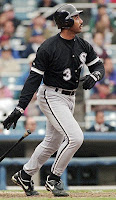
3. Frank Thomas: Who else remembers how good Frank Thomas was in his prime? Of course, that's when he was a first baseman. Then the injuries hit (and this guy named Konerko showed up) and the Big Hurt became the White Sox' DH. He didn't play in the 2005 World Series due to injury, then played for the A's and Blue Jays before retiring after the 2008 season. He hit 521 career home runs, 269 of which came as a designated hitter, second-most all-time. Thomas also had a career batting average of .301. He's eligible for Cooperstown next year. He won't have to wait too long to get in, either.

4. Harold Baines: The degree of certainty to which I believe Harold Baines actually owned a glove at any point in his career is pretty minimal. But he's also a prime example of why the DH is a wonderful thing. Knee problems forced him to become a full-time DH at age 27, yet was a six-time All-Star who belted 384 career home runs and had his number retired by the White Sox when he was still an active player. Baines played more games at DH (1652) than anybody in history, and he was the all-time DH home run leader until passed by Edgar Martinez.

5. Rafael Palmeiro: My feelings on Rafael Palmeiro are well-known. But, steroids or not, the guy could hit. Again, I think his numbers are more a product of his longevity than anything else, but he's still one of only four guys who's a member of both the 500-home run and 3,000-hit clubs. He was also, perhaps, the greatest free agent of all-time, going back-and-forth between the Rangers and the Orioles twice. And let's not forget his 1999 Gold Glove at DH. Now, that's impressive!

6. Jim Thome: Jim Thome's been around for so long that he was the Indians' starting third baseman in the 1995 World Series. But it's been so long since he's played the field that nobody remembers that. He didn't officially become a full-time DH until 2006, but has been one ever since. (He started one game at first base for the Phillies last year, hurt his back and ended up on the DL.) Regardless, he's seventh all-time with 612 career homers and will be a first-ballot Hall of Famer when Cooperstown comes calling. Although, I wouldn't be surprised to see him DHing for somebody at some point this season.

7. David Ortiz: As much as I hate Big Papi and the Boston Red Sox, there's no denying his place as one of the greatest clutch hitters in the game today. Without him, the Red Sox don't break the Curse of the Bambino, yet alone win two World Series in a four-year period. The fact that interleague road games present the Red Sox with a challenge every year, is worth it to them, because he's one of the most beloved players in franchise history. Ortiz became the all-time DH home run leader in 2009 and all-time leader for RBIs among DH's in 2011.

8. Hal McRae: The original. McRae was the first great DH. His first season with the Royals was 1973, the year the DH made its debut. He was a Royal for 14 years, from that mini-dynasty in the 70s to the 1985 World Series championship team. McRae hit over .300 six times and was a three-time All-Star. He later managed the Royals and is a long-time Major League hitting coach.

9. Don Baylor: Before becoming a hitting coach and the first manager of the Rockies, Baylor had a 19-year Major League career. He spent his entire career in the American League and, while also playing some first base and outfield, was mainly a DH for the Angels, Orioles, Yankees, Red Sox, A's and Twins. And he was a great power hitter, belting 338 career home runs. Baylor won the AL MVP in 1979 and is one of two players in history to reach three consecutive World Series with three different teams (1986 Red Sox, 1987 Twins, 1988 A's), all at the end of his career.

10. Chili Davis: Davis started off as an outfielder for the Giants, but became a full-time DH by the end of his first tour of duty with the Angels in 1990. He could switch-hit, and immediately became an integral part of the Twins lineup in 1991, when they won the World Series. After going back to Anaheim and a one-year stop of Kansas City, he won two more rings with the 1998-99 Yankees in his final two Major League seasons. His 350 career home runs are the fifth-most ever by a switch hitter.

There you have it, my list of the 10 greatest DHs in history. It could easily have been much longer. Because I didn't even include guys like Reggie Jackson and Eddie Murray, who were able to extend their Hall of Fame careers with productive years as a DH at the end.
Subscribe to:
Posts (Atom)